Sri Lanka: a first-timer's guide to two monsoons and one small island
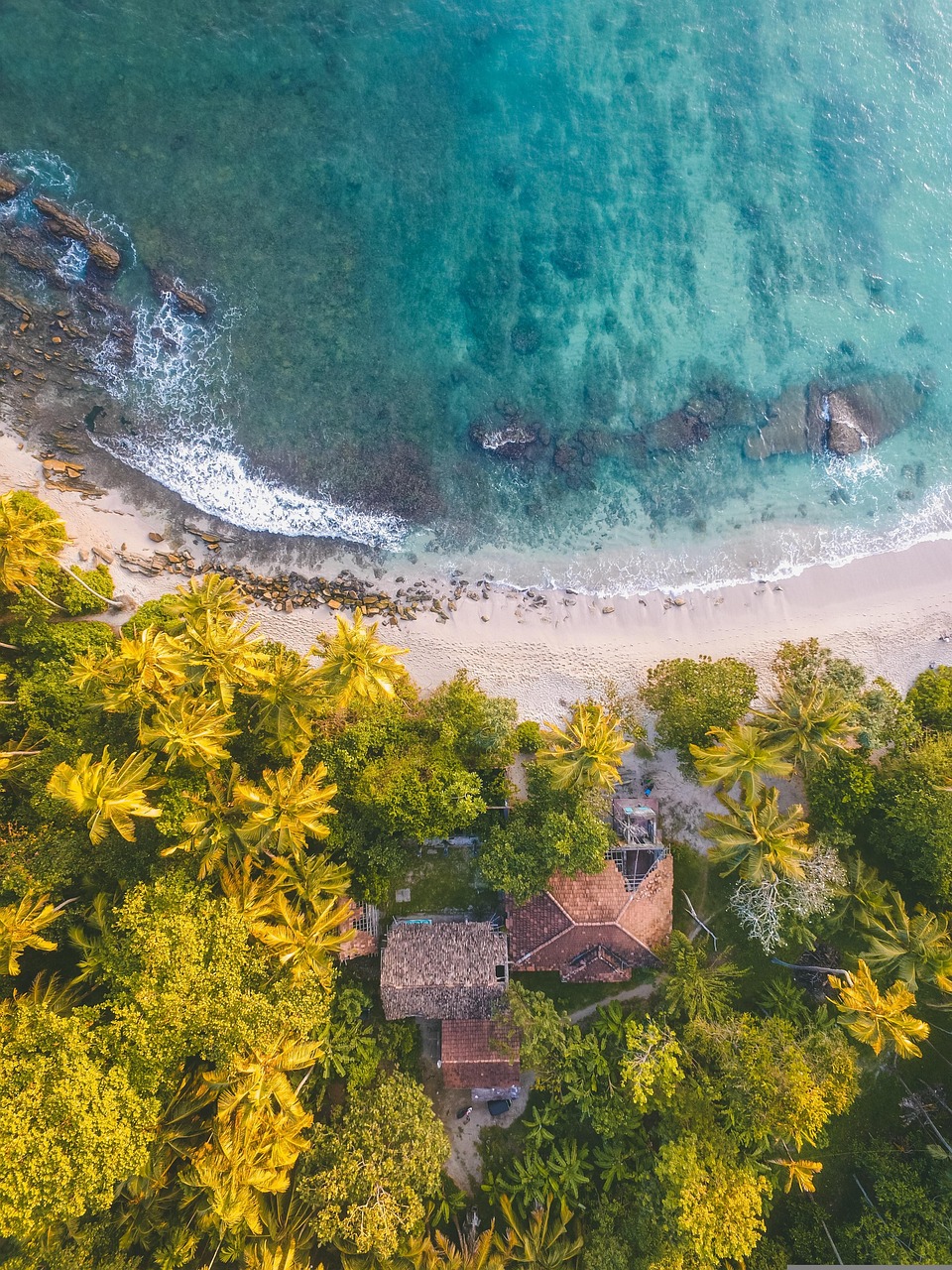
Sri Lanka is small enough to cross in a day and varied enough that you will not want to. In a few hours the road climbs from palm-shaded sand through paddy fields into tea country, where the air turns cool and smells of woodsmoke. Along the way a fifth-century rock fortress rises out of the jungle and someone sets down a plate of eight small curries.
What stays with visitors is the texture of the place: the clatter of a kottu griddle after dark, frangipani at a temple gate, the ease with which strangers start conversations on a train. It is a straightforward country to travel and a difficult one to leave.
Best time to visit
Sri Lanka has two monsoons arriving from opposite directions, so there is no single best time to visit, only a best time for the coast you are heading to. Get this right and you may barely see rain.
The southwest monsoon, known locally as Yala, runs roughly from May to September and wets the west and south coasts and the hill country. The northeast monsoon, Maha, runs roughly from October or November through February and soaks the east and north. So December to March is the season for Colombo, Galle, Mirissa, Tangalle and the Cultural Triangle, while May to September is when Trincomalee, Nilaveli, Arugam Bay and Jaffna are at their best. October and November fall between the two systems and are the most changeable months island-wide. Whale watching follows the same logic: boats go out from Mirissa in the northern winter and from Trincomalee mid-year.
The hill country makes its own weather. Nuwara Eliya and Ella stay cool all year, are often swallowed by afternoon mist and can rain in any month, so carry a fleece and a light waterproof whenever you go.
The Esala Perahera in Kandy, a night procession of drummers, dancers and caparisoned elephants, falls in the July to August window, but the dates follow the lunar calendar and shift each year, so rooms go months ahead. Sinhala and Tamil New Year in mid-April closes many businesses for days, and every full moon is a Poya holiday, when alcohol is generally not sold.
Where to go
Most first trips form a loop. Colombo is worth a day for the Pettah bazaar and sunset kite-flyers on Galle Face Green. North lies the Cultural Triangle: Sigiriya, the rock citadel you climb past ancient frescoes to a summit of ruined water gardens; the painted cave temples at Dambulla; the old capital of Polonnaruwa, best seen by bicycle; and Anuradhapura, where pilgrims in white circle a sacred fig tree.
Kandy holds the Temple of the Sacred Tooth Relic, and beyond it the hill country unfolds through Nuwara Eliya's tea estates to Ella and its Nine Arch Bridge, then on to the moorland of Horton Plains, where the path stops abruptly at the cliff called World's End. On the south coast, Galle Fort is the set piece, a Dutch-walled town made for sunset. Yala has the leopards and the crowds; Udawalawe is calmer and near-certain for elephants.
For something quieter, head north to Jaffna, where the food, the language and the Nallur Kandaswamy temple feel like another country. Walkers have the Knuckles Range east of Kandy, and Kalpitiya on the northwest coast has dolphin pods, kitesurfing and almost no crowds.
Getting around
The trains are the joy of the place: slow, cheap and gloriously scenic, above all the hill line from Kandy through Nanu Oya to Ella and the coastal run south from Colombo that skims the sea. Reserved seats on the hill line open a set number of days ahead and can vanish within hours, so book early through the official railway site or a reputable agent.
Buses go everywhere and cost very little, though they are crowded and briskly driven, and air-conditioned expressway coaches link Colombo, the airport and the south. In towns, tuk-tuks are the default: agree the fare first, or use PickMe, the local ride-hailing app, which meters tuk-tuks and cars in Colombo, Kandy, Galle and Negombo.
Hiring a car with a driver is affordable and removes the strain of chaotic roads; if you want to drive yourself, check the licence and permit rules in the GOV.UK foreign travel advice first. Plan for distances that look tiny and take hours, as 100 kilometres can eat half a day.
Where to stay
Family-run guesthouses and homestays are the backbone of Sri Lankan travel and often superb value, breakfast included. At the other end sit restored planters' bungalows on tea estates, boutique villas inside Galle Fort and tented safari camps near Yala.
Negombo is the practical first or last night, being close to the airport, and Sigiriya or Habarana makes a Cultural Triangle base. On the south coast, Unawatuna and Mirissa are lively, Ahangama and Weligama are surf towns, Tangalle and Hiriketiya calmer. In Colombo, Fort and Galle Face have the grand hotels; Cinnamon Gardens is leafier and quieter.
What to eat
Rice and curry is not one dish but a spread: rice with dhal, a fiery pol sambol of grated coconut, chilli and lime, shredded greens called mallung, and often a young jackfruit curry that eats like meat. Breakfast means hoppers, bowl-shaped rice-flour pancakes best with a soft egg cooked into the middle, or string hoppers with coconut gravy. Late at night, seek out kottu, flatbread chopped on a griddle with egg and spice.
Look out for lamprais, a Dutch Burgher legacy baked in a banana leaf, and Jaffna crab curry in the north, darker and hotter with roasted spice. Drink king coconut water from the shell and finish with buffalo curd and kithul treacle. Sri Lankans eat with the fingers of the right hand, and nobody minds if you ask for a spoon. Be honest about your chilli tolerance.
Culture and courtesy
This is a majority Buddhist country with substantial Hindu, Muslim and Christian communities, and religious spaces are taken seriously. At temples, remove shoes and hats and cover shoulders and knees. Never pose with your back to a Buddha image, and be aware that visible Buddha tattoos and casual use of Buddhist imagery cause real offence and have caused travellers trouble at the border.
Away from the beach, dress modestly; topless sunbathing is not acceptable anywhere. Take your shoes off when entering a home, pass things with your right hand, ask before photographing people, and do not be thrown by the sideways head wobble, which usually means yes. A greeting goes a long way: Ayubowan in Sinhala, Vanakkam in Tamil.
Practical essentials
Many visitors need an Electronic Travel Authorisation obtained online before flying, and its fee, validity and conditions have changed more than once, so check the GOV.UK foreign travel advice for Sri Lanka before booking, including how long your passport needs to be valid. Apply through the official Sri Lankan government portal only, as lookalike agencies add their own charges.
The currency is the Sri Lankan rupee. Cards work in hotels and city restaurants, but carry cash for tuk-tuks, market stalls and rural stops. Costs are low by UK standards.
Staying connected. Sri Lanka sits outside almost every inclusive roaming allowance sold in the UK, so leaving data roaming on can produce an unpleasant bill. A local SIM is cheap but legally requires identity registration with your passport, which usually means queuing at an airport counter after a long flight. An eSIM from idealesim avoids both: install it over Wi-Fi at home, then come online as you walk to baggage reclaim in Colombo. Coverage is strong along the coasts and in Colombo, Kandy and the Cultural Triangle, but expect it to thin in the Knuckles Range, on Horton Plains and in remoter parts of the north and east.
Sinhala and Tamil are the official languages, and English is widely spoken in tourism and printed on most signs; Istuti and Nandri are thank you in Sinhala and Tamil. The usual annoyances are inflated tuk-tuk fares and gem-shop touts, but the real risks are natural: rip currents are strong and most beaches unpatrolled, so ask locally before swimming, and dengue is present year round, so use repellent day and night. Stick to filtered water, and check vaccination advice with a travel clinic. Sockets are 230 volts and mainly round-pin type D.
Give it more days than you think
The commonest regret among first-timers is trying to see the whole island in ten days and spending half of them in a car. Pick two regions, add a coast that matches the season, and leave room for the accidental afternoons: the procession that blocks the road, the train window you cannot stop looking through. Sri Lanka rewards anyone willing to slow down.
Not travelling yet?
Tell us your travel date and we will email you before you go (a week before, or when you choose) with the latest Sri Lanka eSIM prices. No account needed.