Morocco: a first-timer's guide from medina to desert
Few countries pack as much sensory drama into so little distance as Morocco. In a single week you can haggle for lanterns in a medieval medina, sip mint tea on a rooftop as the call to prayer drifts across the city, watch the sun sink behind Saharan dunes, and eat grilled sardines beside the Atlantic. A short hop from Europe yet a world apart, Morocco is one of the most rewarding introductions to North Africa there is. Here is how to make a first visit sing.
Best time to visit
Spring (March to May) and autumn (September to November) are the sweet spots, with warm days and cool evenings from the imperial cities to the desert. Summer turns Marrakech and Fes fiercely hot, though the Atlantic coast around Essaouira stays breezy and mild. Winter brings sunny days in the south, cold nights in the desert, and snow on the High Atlas - pack layers whatever the season, because temperatures swing hard between noon and midnight.
If your dates overlap with Ramadan, you can still have a wonderful trip - evenings turn festive once the fast breaks - but daytime opening hours shift, so check the dates (they move each year) and plan with a little extra flexibility.
Top destinations and attractions
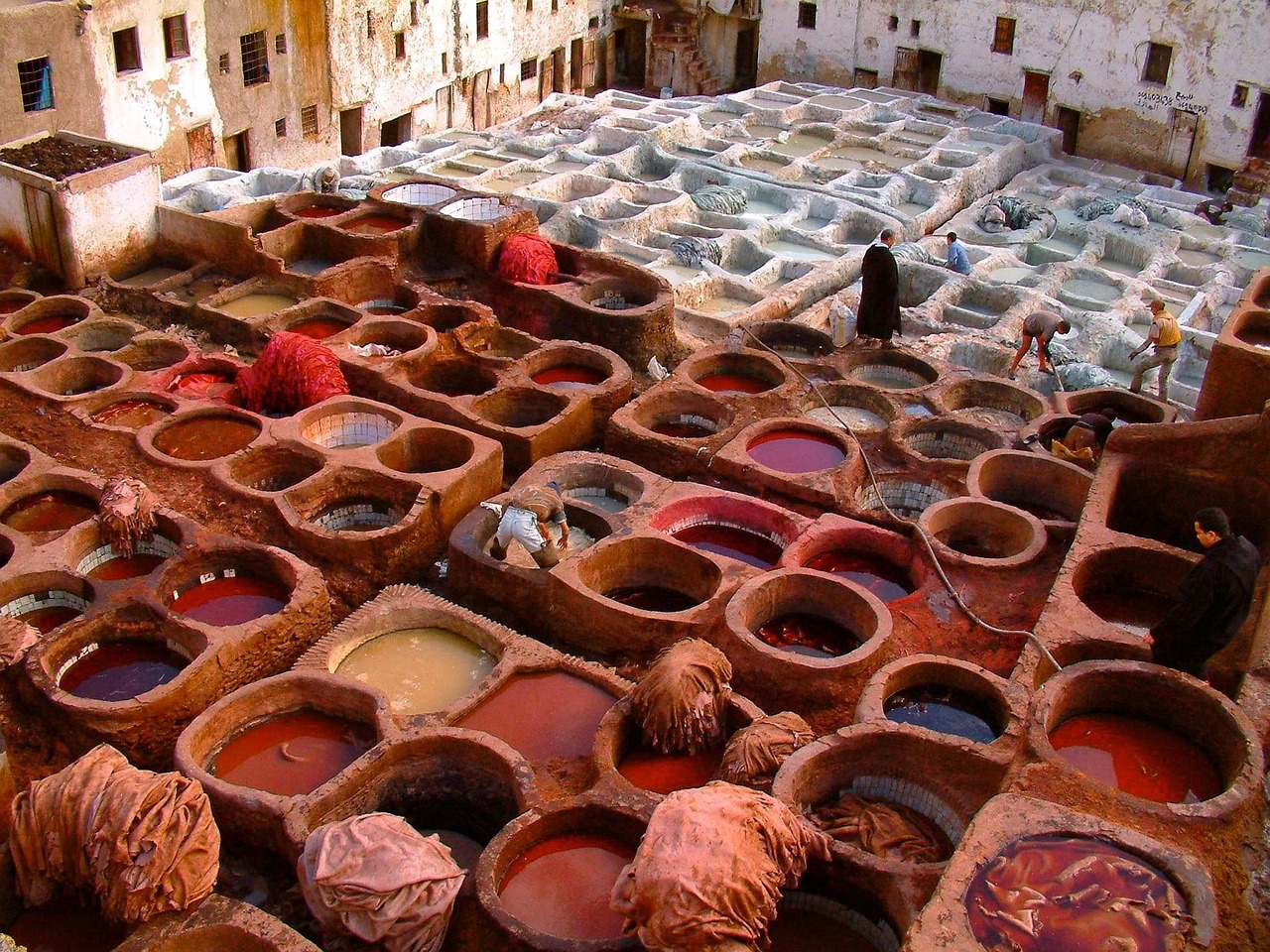
Marrakech is the classic opener: the carnival of storytellers and food stalls on Jemaa el-Fnaa square, souks stacked with leather and brass, the tiled courtyards of the Bahia Palace, and the cobalt-blue calm of the Jardin Majorelle. Fes counters with depth - its ancient walled medina, Fes el-Bali, is a living labyrinth of workshops and tanneries, best explored slowly with a licensed guide. In the Rif foothills, Chefchaouen's blue-washed lanes are as photogenic as promised, while laid-back Essaouira pairs sea air and fresh seafood with a fortified old town made for an unhurried afternoon.
Then there is the landscape. The High Atlas rises within sight of Marrakech, dotted with Amazigh villages and trailheads around Imlil. The road south crosses dramatic passes to Ait Benhaddou, a UNESCO-listed mud-brick kasbah familiar from countless films, before reaching the Saharan dunes near Merzouga, where a camel trek to a desert camp - dinner by firelight, a sky thick with stars - is the memory most first-timers rank above all else.
Getting around
Morocco's trains are a pleasant surprise: comfortable services link Marrakech, Casablanca, Rabat, Fes, and Tangier, and the Al Boraq high-speed line - Africa's first - whisks you between Tangier and Casablanca. Where the rails stop, reliable intercity coaches such as CTM and Supratours reach Chefchaouen, Essaouira, and the desert towns. Within cities, small metered "petit taxis" are cheap and everywhere; shared "grand taxis" cover hops between towns. A rental car unlocks the Atlas passes and southern valleys - main roads are good - but leave it outside the medinas, whose lanes belong to feet, mules, and handcarts. Many visitors reach the Sahara on a multi-day tour and let someone else drive.
Where to stay
Skip the chain hotel at least once and sleep in a riad - a traditional courtyard house tucked inside the medina, often wrapped around a fountain and topped with a roof terrace. Riads range from simple guesthouses to luxurious hideaways, and breakfast on the terrace is part of the experience. Arrange an arrival transfer when you book; a guided walk to the door saves a sweaty search. Beyond the cities, desert camps near Merzouga run from basic to boutique, kasbah-style hotels line the southern oasis valleys, and Essaouira offers relaxed seaside stays.
Food and drink
Moroccan cooking is slow, fragrant, and generous. Tagines - meat, fish, or vegetables simmered with olives, preserved lemon, or dried fruit - appear on every menu and somehow never get old. Couscous is traditionally a Friday dish, harira is the beloved tomato-and-lentil soup, and pastilla folds sweet and savoury into flaky pastry. Graze on msemen flatbreads and fresh orange juice in the souks, and give the street grills of Jemaa el-Fnaa an evening. Mint tea is the national ritual: poured from a height, sweetened enthusiastically, and offered constantly - accepting a glass is the easiest way to make a friend. Alcohol is available but discreet, served mainly in licensed hotels and some restaurants; many places are dry.
Culture and etiquette
Morocco is a Muslim country that is used to visitors, and a little consideration goes a long way. Dress modestly - shoulders and knees covered is a good baseline, especially in medinas and rural areas; women do not need to cover their hair, though a scarf is handy. Nearly all mosques are closed to non-Muslims, with the Hassan II Mosque in Casablanca (open via guided tours) the famous exception. Haggling in the souks is expected and good-natured: counter well below the first price, keep it friendly, and feel free to walk away - but once a price is agreed, honour it. Ask before photographing people, keep public displays of affection low-key, and use your right hand when eating from a shared dish.
Practical essentials
Visas: Citizens of many countries, including the UK, US, and much of the EU, can visit visa-free for stays of up to 90 days. Rules vary by nationality and can change, so check the current requirements for your passport before you travel.
Money: The Moroccan dirham (MAD) is largely a closed currency, so plan to exchange or withdraw money once you arrive - ATMs are widespread in cities and towns. Cards are accepted in riads, hotels, and smarter restaurants, but souks, taxis, and street stalls run on cash, so keep small notes handy for tips.
Staying connected: Save yourself the airport SIM queue: install a Morocco travel eSIM from idealesim over Wi-Fi before you fly, and you will have data the moment you land. The plan's validity only starts when the eSIM first connects to a network in the country, so setting it up days in advance is completely safe - and you will be glad to have maps and a translation app working the second you step into your first medina.
Language: Arabic and Amazigh are official, with Moroccan Arabic (Darija) spoken day to day and French widely used on menus and signage. English is increasingly common in tourist areas. A few words - "salam" (hello), "shukran" (thank you), "la, shukran" (no, thank you) - earn instant goodwill.
Safety and health: Morocco is generally safe for travellers; the main nuisances are petty hustles and unofficial "guides" around the big medinas, best handled with polite firmness. Stick to bottled or filtered water, pack sun protection, and carry travel insurance as you would anywhere.
Plugs: Types C and E (European two-pin), 220 volts. One standard European adapter covers the whole trip.
Closing thoughts
Morocco rewards travellers who slow down: linger over a second glass of tea, get properly lost in the medina at least once, and say yes when a shopkeeper wants to chat. Go with a light bag and an open mind, and the country will hand you colour, kindness, and stories in return. The dunes are waiting - and so is the tea.