The Maldives: a first-timer's guide to islands, reefs and atoll hopping
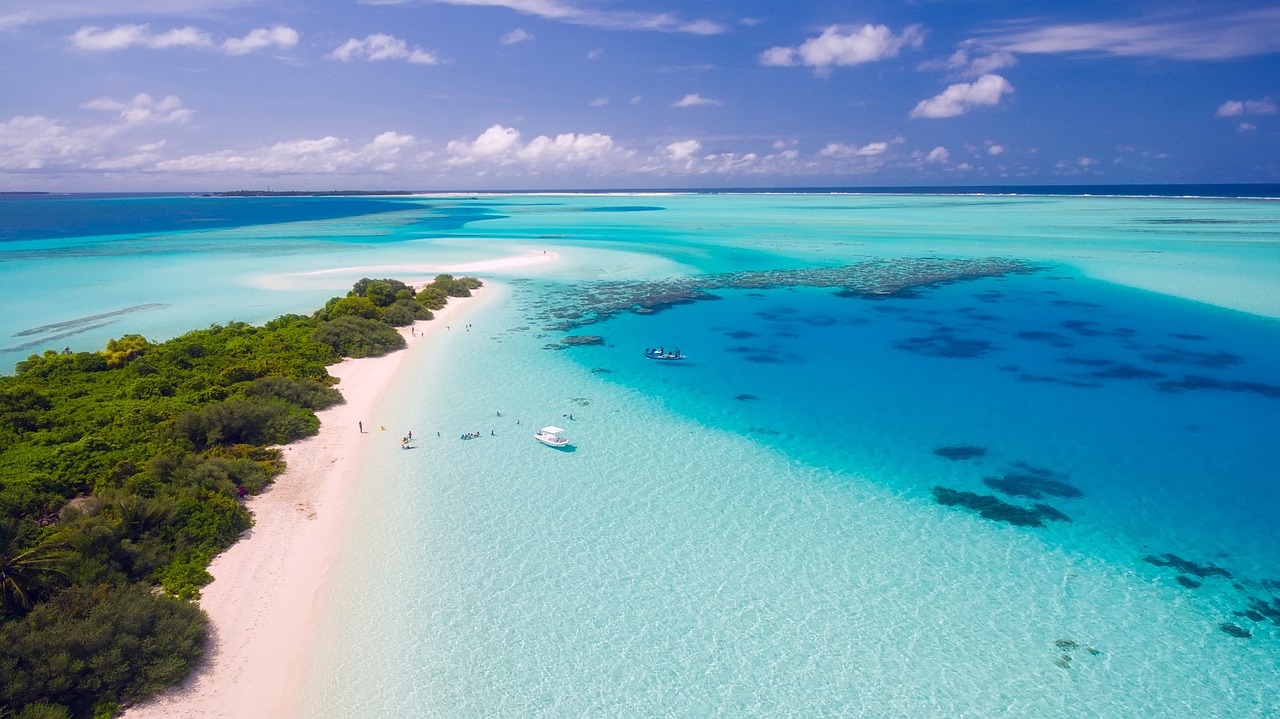
The first thing that gets you is the colour. From the aircraft window the Indian Ocean shifts from ink to jade to a pale, impossible turquoise, and scattered across it are hundreds of green discs ringed with white sand. The Maldives is almost entirely water: roughly 1,190 coral islands across 26 atolls, most barely two metres above the sea.
It has a reputation as a honeymoon fantasy priced for other people, and that is half true. Alongside the overwater villas there is a whole country of fishing villages, guesthouses, tea shops and coral gardens that first-timers rarely hear about.
Best time to visit
The Maldives sits just north of the equator and is warm all year, usually around 30C. What changes is the wind and the rain. The northeast monsoon, known locally as iruvai, runs roughly from December to April and brings the calm seas and clear water of the brochures. This is peak season, and rates over Christmas and New Year are the highest going.
The southwest monsoon, hulhangu, runs from about May to November, with more cloud, short downpours and choppier crossings. It is also considerably cheaper, and it is when plankton blooms draw manta rays to Hanifaru Bay in Baa Atoll. Ramadan follows the lunar calendar and moves earlier each year, so check the dates: on inhabited islands cafes may close during daylight. The Eid holiday that follows is a joyful time to be there.
Where to go
Most trips begin in Malé, one of the world's most densely populated capitals, worth half a day rather than a week. See the Hukuru Miskiy, the 17th century Old Friday Mosque carved from coral stone, the gold-domed Islamic Centre, and the fish market at dusk when the day's yellowfin lands. Across the bridge, Hulhumalé has a long swimming beach and easy airport access.
The reef is the real destination. South Ari Atoll has resident whale sharks within its protected area. Baa Atoll has Hanifaru Bay, a UNESCO biosphere site where dozens of mantas feed at once, visited by snorkel only and with a licensed guide. Rasdhoo is known for dawn hammerhead dives.
For places few first-timers reach, try Fuvahmulah, a single island forming its own atoll, with freshwater lakes, the pebble beach at Thoondu and famous tiger shark diving. Addu Atoll in the far south links several islands by causeway, so you can cycle between them past the remains of a British airbase. Thoddoo, north of Malé, grows watermelons and has a quiet bikini beach.
Getting around
Everything is a boat or a plane, and first-timers underestimate this. Velana International Airport sits on its own island beside Malé. Resorts near the capital are reached by speedboat in 20 to 90 minutes. Anything further means a seaplane, which flies in daylight only, or a domestic flight to a regional airport such as Dharavandhoo, Maamigili or Gan, followed by another boat.
Transfers are arranged through your resort or guesthouse and are a serious cost in their own right: a seaplane can add several hundred pounds per person, so ask for the figure before committing to an island. Book flights that land in the morning where you can, because a late arrival often means an unplanned night near the airport once the seaplanes stop.
Independent travellers can use the public ferries, cheap and charming but slow and infrequent, with reduced or no service on Fridays. Shared speedboats fill the gaps between popular guesthouse islands. Malé and Hulhumalé have taxis and ride-hailing apps; everywhere else, you walk.
Where to stay
There are three broad choices. Resorts occupy an entire island each, all-inclusive or close to it, with the villas, spa and alcohol licence. Prices run from surprisingly reasonable at older properties near Malé to eye-watering further out.
Guesthouses on inhabited local islands are the option many people do not realise exists. Since guesthouse tourism was legalised around 2009, islands such as Maafushi, Dhigurah, Ukulhas and Fulidhoo have small family-run hotels where a room, breakfast and a snorkelling trip cost a fraction of resort rates. You eat where Maldivians eat and swim at a designated bikini beach.
Liveaboard dive boats are the third route, moving between sites for a week or more, and are excellent value if diving is the point. Many visitors combine two styles: a few nights on a local island, then a short splurge at a resort.
What to eat
Maldivian cooking is built on tuna, coconut and chilli. Breakfast is mas huni, shredded smoked tuna mixed with grated coconut, onion and lime, scooped up with warm roshi flatbread. Lunch might be garudhiya, a clear tuna broth poured over rice and sharpened with lime and chilli, or a hot curry such as mas riha.
The great pleasure is hedhikaa, the short eats sold in every tea shop: gulha, fried dough balls with tuna inside; bajiya, pastry triangles; masroshi, a fish-stuffed flatbread; and kulhi boakibaa, a dense baked fish cake. Order at the counter with a glass of sweet black tea.
Alcohol is not sold on inhabited islands, only at resorts, on liveaboards and at a few licensed places near the airport. Do not try to bring any in. Resort water is desalinated and generally fine; on local islands most people drink filtered or bottled water.
Culture and courtesy
The Maldives is a Muslim country, and that matters most away from the resorts. A resort island is a private bubble where swimwear is normal. An inhabited island is somebody's home village, so cover shoulders and knees in the streets, keep swimwear to the marked bikini beach and avoid public displays of affection. Men should not wander through a village shirtless.
You will hear the call to prayer five times a day, and shops may close briefly around Friday midday prayers. Ask before photographing people, and greet them with assalaam alaikum. Nudity and topless sunbathing are against the law anywhere in the country, resorts included.
Reef etiquette counts just as much. Do not stand on, touch or take coral, keep a respectful distance from mantas and whale sharks, and wear a rash vest rather than slathering on sunscreen.
Practical essentials
Entry rules, including visas on arrival, any online traveller declaration and the documents you need to show at the border, depend on your nationality and change, so check the GOV.UK foreign travel advice for the Maldives before booking. Customs rules are strict too, so check what you cannot bring in before you pack: the list has included alcohol, pork products and vaping devices.
The currency is the Maldivian rufiyaa, though resorts, guesthouses and dive centres price in US dollars and take cards. Carry small notes for tea shops and ferries. Quoted rates often exclude green tax and service charge, so ask whether a price is inclusive.
Staying connected. Coverage from the two national operators is good across Malé, Hulhumalé and most inhabited islands and resorts, but it thins on long boat crossings and around the remoter atolls, and villa Wi-Fi can be slow. The Maldives sits well outside typical UK and EU inclusive roaming allowances, so leaving data roaming switched on can produce an unpleasant bill, and buying a local SIM means queueing and registering your passport on arrival. An eSIM from idealesim avoids all of that: install it over Wi-Fi at home, land, switch it on, and you have data for transfer instructions and check-in messages before you reach the jetty.
Dhivehi is the national language and English is widely spoken in tourism. Shukuriyaa means thank you, and kihineh is a friendly how are you. Sockets are usually the UK three-pin type at 230 volts, so British visitors need no adapter. Crime levels are low; the real risks are sun, dehydration and currents. Bring reef shoes and buy insurance that explicitly covers diving and seaplane transfers, because serious medical care means a flight back to Malé.
Go for the water, stay for the islands
The Maldives rewards planning more than almost anywhere: choose the atoll first, price the transfer second, and decide whether you want a private island or a village with a reef at the end of the road. Do that and the rest looks after itself - reef sharks at dawn, chilli stinging in a bowl of garudhiya, the sky going pink over an empty sandbank. Book the boat and go.
Not travelling yet?
Tell us your travel date and we will email you before you go (a week before, or when you choose) with the latest Maldives eSIM prices. No account needed.