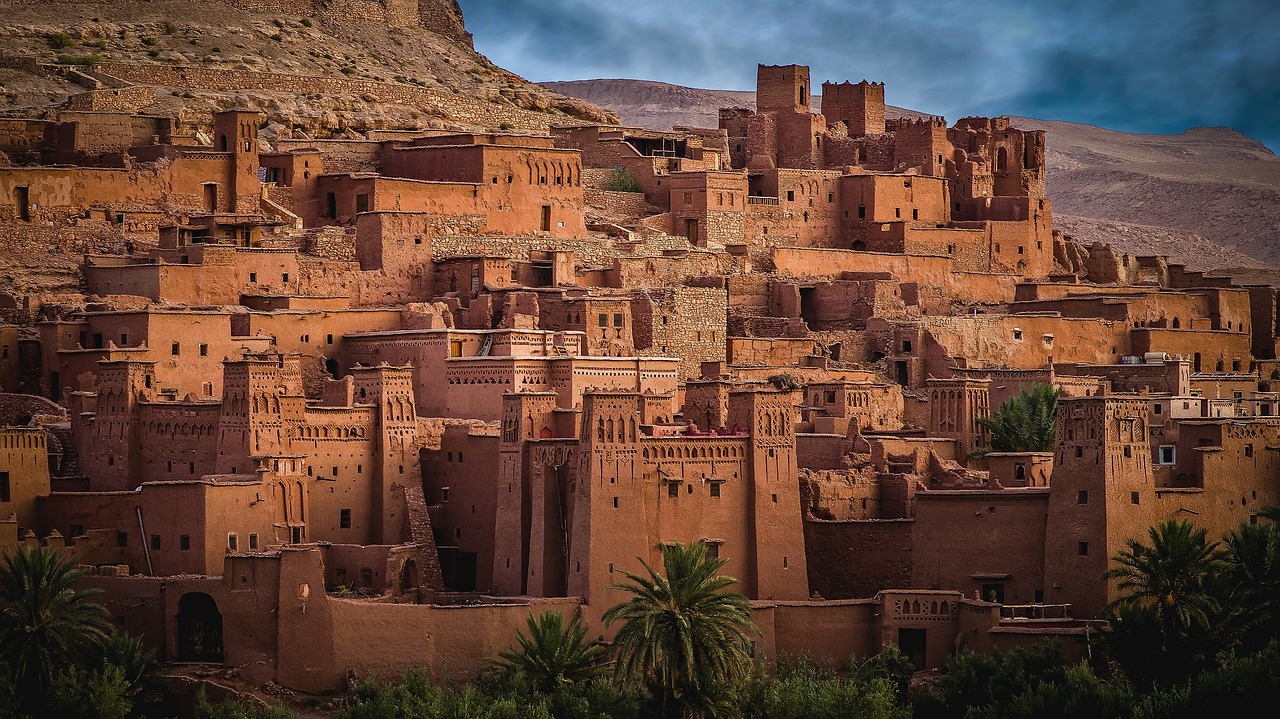

Marrakech, Morocco
eSIM Data Plans
Best eSIM plans for Marrakech
Three travel data plans that suit most trips to Marrakech, or see every Moroccan eSIM below. Morocco plans work across the whole country.
Not travelling yet?
Tell us your travel date and we will email you before you go (a week before, or when you choose) with the latest Marrakech eSIM prices. No account needed.
Your Marrakech eSIM guide
Marrakech wakes the senses from the moment you arrive. Storytellers, musicians and food stalls fill the great square at dusk, spice and leather sellers crowd the lanes around it, and behind plain wooden doors sit tiled courtyards cooled by fountains. Days slip by between palaces, gardens and good-natured haggling, and evenings end over mint tea as the light fades on the Atlas peaks beyond the city walls.
Mobile coverage in Marrakech
As one of Morocco's busiest cities and its best-known holiday destination, Marrakech is generally well covered by mobile signal. Morocco has three mobile networks, Maroc Telecom, Orange and inwi, and all of them serve the city. In the modern districts of Gueliz and Hivernage, along the wide avenues and around the larger hotels, you can usually expect dependable 4G for maps, messaging and video calls.
The medina is where things get more interesting. Its lanes are narrow and often partly roofed, and the old buildings have thick walls, so signal that is strong in an open square can weaken noticeably a few turns into the souks or once you step inside a riad. Most riads offer Wi-Fi to make up for this, though quality varies from house to house. Out of town, on the roads towards the mountains or into the Agafay desert, coverage becomes more patchy, and if you want a plan on a particular network, each plan's page shows which network it uses.
Getting around Marrakech
Marrakech Menara (RAK) sits close to the centre, so the ride into the medina or Gueliz is short by taxi or airport bus, and many riads arrange a pick-up. Cars cannot get far into the medina's lanes, so drivers often drop you at the nearest gate, where someone from your riad meets you, and having data working at that moment makes it far easier to share a pin or call ahead. Petits taxis are the usual way to hop between the medina and the new town, while grands taxis and organised tours handle longer trips, and the railway station in Gueliz links Marrakech to the national ONCF network heading north towards Casablanca.
Within the city, signal on the move is usually steady along the main roads and around the ramparts. On foot in the medina it is less predictable, which matters because that is exactly where a map is most useful. Day trips change the picture again: the drive into the Ourika valley passes through villages with reasonable coverage, but signal thins as the valley narrows, and the stony plateau of the Agafay desert, despite being so near the city, can be hit and miss once you leave the road.
Where you'll use data most in Marrakech
Jemaa el-Fna is the heart of the city and the place most visitors return to again and again. As a wide open square it usually has good signal, though at its busiest in the evening the sheer number of people can make connections feel slow. The minaret of the Koutoubia Mosque rises just beside it and is the easiest landmark for getting your bearings. From here the souks spread north in a tangle of alleys, and this is where an offline map and a saved pin for your riad really pay off, as reception can fade among the covered stalls.
South of the square, the Bahia Palace and the streets of the Mellah, the old Jewish quarter, are generally fine for signal outdoors, though it can be weaker inside thick-walled courtyards. Over in the new town, Jardin Majorelle, with its cobalt-blue villa and cactus gardens, is one of the most photographed spots in Morocco, and the surrounding streets of Gueliz are usually well connected for booking a table or a taxi afterwards. Back in the medina, a riad's roof terrace is often the best place in the house for a clearer signal, and a pleasant spot to upload the day's photos.
Tips for staying connected in Marrakech
- Install your eSIM before you fly and switch it on when you land at Menara, so you can message your riad while you are still in the arrivals hall.
- Ask your riad to send its location as a map pin before you arrive, and save it offline: finding the right door in the medina without one is a classic first-day challenge.
- Download an offline map of the medina and the souks, as signal can drop just when you need directions most.
- Morocco sits outside the European roaming deals bundled into most UK plans, so roaming here tends to be billed at higher worldwide rates. Look up your own network's charges before you depend on it.
- Keep your phone secure in crowded souks and on the square, ideally in a zipped pocket or bag rather than in your hand.
- Save Morocco's emergency numbers, 19 (police) and 15 (ambulance and fire), before heading out on day trips to the mountains or the desert.
See every option on our Morocco eSIM page, or plan onward travel with eSIM for the Atlas Mountains, eSIM for Essaouira and eSIM for Merzouga.
All Moroccan eSIM data plans
14 plans from £0.62. Prices include VAT, shown in GBP.
Not sure how much data you need?
Tell us your trip length and how you'll use your phone, and we'll point you to the right plan.
Added to your basket