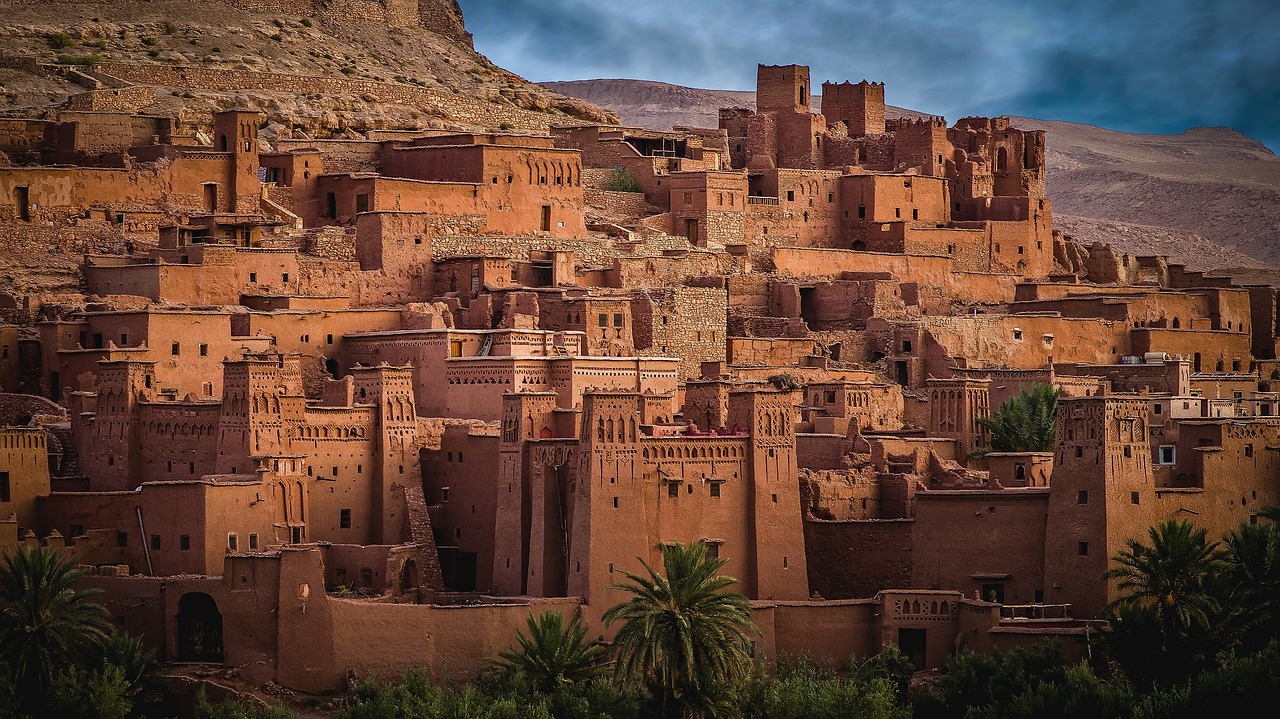

Atlas Mountains, Morocco
eSIM Data Plans
Best eSIM plans for Atlas Mountains
Three travel data plans that suit most trips to Atlas Mountains, or see every Moroccan eSIM below. Morocco plans work across the whole country.
Not travelling yet?
Tell us your travel date and we will email you before you go (a week before, or when you choose) with the latest Atlas Mountains eSIM prices. No account needed.
Your Atlas Mountains eSIM guide
The High Atlas rises just beyond Marrakech, a world of earth-coloured villages clinging to terraced slopes, walnut groves, rushing rivers and peaks that are often dusted with snow in winter. Days here are measured in footsteps, from gentle valley walks to multi-day treks with mules carrying the bags, and for the ambitious, a push to the top of the range itself. Evenings bring tagine, mint tea and star-filled skies.
Mobile coverage in the Atlas Mountains
The Atlas Mountains are not one destination but a vast range, and mobile coverage reflects that. Maroc Telecom, Orange and inwi all reach into the mountains, and in the larger villages, around popular guesthouses and along the main roads you can often get a usable 4G signal. Away from those places, though, steep slopes and deep valleys block signal easily, and it is normal to lose it completely for long stretches.
As a rule of thumb, expect reception to be at its best on open ridges and near villages, and at its weakest down in the valley bottoms and higher up on remote trails. Mountain guesthouses sometimes have Wi-Fi, but it is often slow or limited, so it is wise to treat your time here as partly offline. Network choice can make a real difference in the mountains, as one may reach a valley another does not, so if that matters to you, each plan's page shows which network it uses.
Getting around the Atlas Mountains
Most trips into the High Atlas begin in Marrakech, with visitors flying into Marrakech Menara (RAK) and heading south by road. The drive to Imlil takes roughly an hour and a half to two hours, and the Ourika valley is a similar distance or a little less, so both work as day trips or the start of a longer stay. Grands taxis, organised tours and private drivers are the usual ways in, and the final stretch to many villages is on foot or by mule. Those crossing the mountains often take the Tizi n'Tichka pass road towards Ouarzazate, where Ouarzazate (OZZ) airport sits on the far side.
On the road, signal is generally fine as you leave Marrakech and pass through larger settlements, but it becomes patchy as the route climbs. The Tizi n'Tichka is a spectacular drive with hairpin bends and high viewpoints, and there are mountain stretches where coverage drops out. On trekking routes, you should assume long gaps without signal, especially between villages, and plan everything you need before you leave the last place with a connection.
Where you'll use data most in the Atlas Mountains
Imlil is the best-known base in the High Atlas, a village surrounded by orchards that serves as the gateway to Toubkal, the highest peak in North Africa. Signal in the village itself is often workable, and this is where most people confirm guides, check the weather and send a last message home before setting off. Higher up the trail towards the summit, coverage becomes unreliable, and you should not count on it. Treks with a qualified local guide are the norm here and strongly recommended.
The Ourika valley is the gentler option, with riverside cafes, small villages and a series of waterfalls reached by a scramble above Setti Fatma. Near the road and the cafes signal is usually reasonable, but it fades quickly as you climb towards the falls. On the Tizi n'Tichka route, viewpoints along the pass are tempting places to stop for photos, though you may need to wait until the next town to share them.
Tips for staying connected in the Atlas Mountains
- Install your eSIM before you leave home and switch it on when you land in Marrakech, so it is working well before you head into the hills.
- Offline maps are essential here: download the whole area and any trekking routes before you go, as you will be without signal for much of the time.
- Share your route and expected return time with your guide or guesthouse, rather than relying on being able to message from the trail.
- Cold weather at altitude drains batteries quickly, so keep your phone warm in an inside pocket and carry a power bank.
- Morocco is outside the European roaming arrangements that most UK plans include, so roaming in the mountains is likely to cost more at worldwide rates. Look into your network's charges before you set off.
- Write down Morocco's emergency numbers, 19 (police) and 15 (ambulance and fire), as well as saving them in your phone, and keep your guide's number handy.
For nationwide plans, see our Morocco eSIM page, or continue your journey with eSIM for Marrakech, eSIM for Merzouga and eSIM for Essaouira.
All Moroccan eSIM data plans
14 plans from £0.62. Prices include VAT, shown in GBP.
Not sure how much data you need?
Tell us your trip length and how you'll use your phone, and we'll point you to the right plan.
Added to your basket