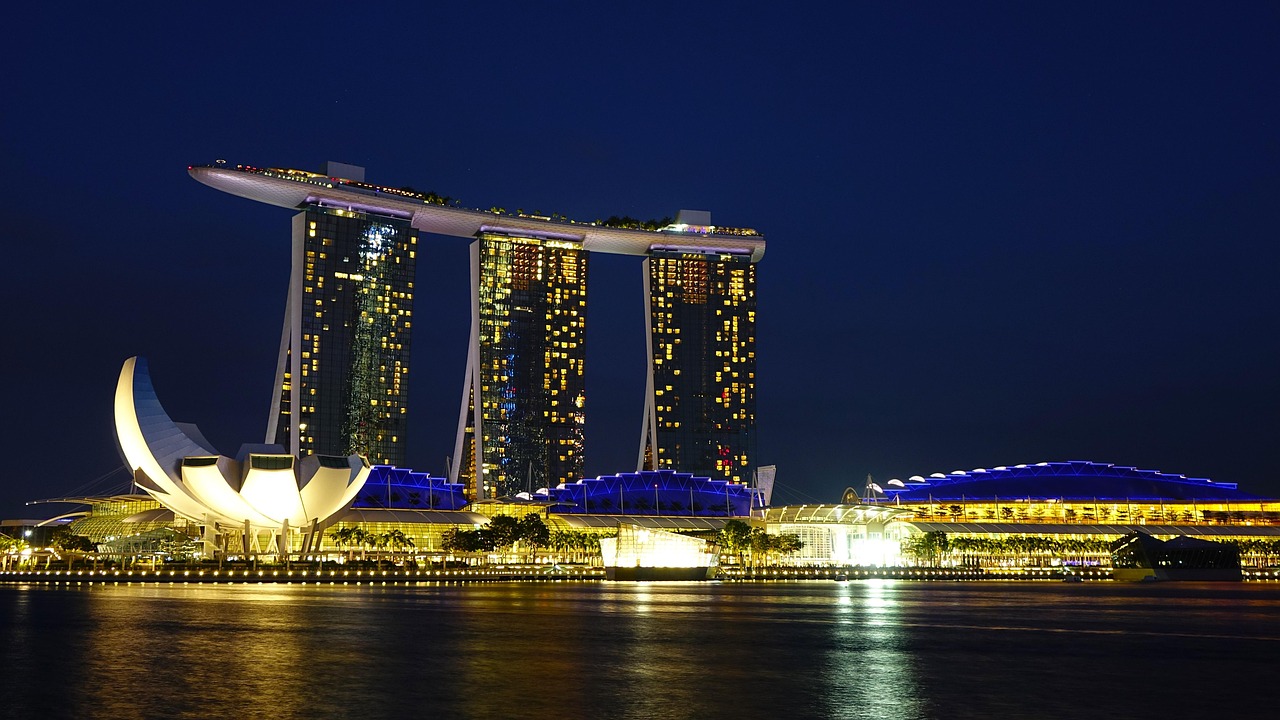

eSIM for Singapore
Land connected in Singapore. Pick a plan below - it activates in seconds, no physical SIM, no roaming fees.
Best eSIM plans for Singapore
Three travel data plans that suit most trips to Singapore, or see the full list of Singaporean eSIMs below.
Not travelling yet?
Tell us your travel date and we will email you before you go (a week before, or when you choose) with the latest Singapore eSIM prices. No account needed.
Your Singapore eSIM guide
How to install your Singapore eSIM in 3 steps
Changi Airport's arrival halls are efficient, but there's still no reason to queue at a telco counter when you can be online the moment you clear the gate. Here's how it works.
- Buy your Singapore plan before you fly. You'll get a QR code and setup instructions by email within minutes of ordering, so there's nothing to pick up on arrival.
- Install it on Wi-Fi while you still have internet. The eSIM installation step itself needs a data connection, so do this before you leave home, not after landing at Changi with no signal. iPhone: Settings > Cellular > Add eSIM, then scan the code. Android: Settings > SIM Manager > Add eSIM, then scan the code.
- Activate on arrival in Singapore. Once you land at Changi (Terminal 1 through 4), turn on data roaming for the eSIM line specifically. You should pick up a Singtel, StarHub, or M1 signal within the arrivals hall itself, with no passport check and no queue at a SIM counter.
Mobile network coverage in Singapore
Four operators serve the island: Singtel, StarHub, M1, and Simba. Because Singapore is a compact city-state, none of them have the large rural dead zones you'd find in bigger countries, but the four still perform differently once you compare them district by district.
Marina Bay, Orchard Road, and the business districts
Singtel is the widest of the four, with strong 4G across essentially the whole island and a 5G-SA footprint that covers most of the built-up area, including median speeds that tend to run faster than the other three around Marina Bay and the Central Business District. StarHub is close behind with reliable outdoor 5G along the length of Orchard Road's shopping stretch, and M1 also holds up well across the city core. Simba, the newest entrant, runs on thinner 5G spectrum and can feel patchier once you're indoors in Orchard's malls or Marina Bay Sands' lower floors.
Sentosa, Pulau Ubin, and the outer islands
Sentosa's beaches, theme parks, and water parks are well covered on all four networks, since it's a short hop from the mainland. Pulau Ubin, the rustic island off Singapore's northeast coast, is a different story: coverage there is noticeably thinner than anywhere else in the country, and it's one of the few spots on the map where you should expect to lose signal for stretches while cycling the trails.
Getting around: the MRT and ferry crossings
Singapore's underground MRT network carries a usable 4G and 5G signal through most tunnel sections, so you can keep navigating or messaging on the commute rather than losing signal every time the train dips below ground. Ferries out to Pulau Ubin or across to Indonesia's Batam and Bintan islands are the exception: once you're mid-strait, expect the connection to fade until you're back near land.
How much data do you need for your trip to Singapore?
How much data you'll burn through depends on whether you're mostly navigating between Marina Bay Sands and Gardens by the Bay or streaming and posting the whole way through Sentosa.
| Usage style | Daily estimate | 1-week trip | Good fit |
|---|---|---|---|
| Light (maps, messaging, occasional browsing) | ~300 MB | 2-3 GB | See light-data plans |
| Moderate (social media, some streaming, navigation) | ~750 MB | ~5 GB | See mid-tier plans |
| Heavy (video streaming, hotspot use, heavy uploads) | 1.5 GB+ | 10-20 GB | See large-data plans |
If a day trip to Pulau Ubin or a ferry crossing to Batam is on your itinerary, download offline maps beforehand; the data table above assumes steady coverage, and those legs are where Singapore's otherwise near-universal signal thins out.
eSIM vs. roaming vs. a local SIM in Singapore
All three get you connected on arrival, but the cost and the paperwork differ enough to matter, especially given Singapore's local SIM registration rules.
| Travel eSIM | Home-carrier roaming | Local SIM | |
|---|---|---|---|
| Typical cost | Plans from £0.62 | Often £7-£19 per day or week depending on your home carrier's plan | Around £7-£15 at Changi Airport, a carrier shop, or a convenience store |
| Setup | Buy online, install before you fly, activate on arrival | Often automatic, sometimes needs a roaming pass enabled first | In-person purchase at Changi's arrivals hall, a Singtel/StarHub/M1 shop, or a 7-Eleven-style store |
| Keep your number | Yes, your home SIM stays in for calls and texts | Yes | No, you get a new Singapore number |
| ID/passport needed | No physical ID check | No | Yes: original passport only, no photocopies, and a passport-registered prepaid SIM is only valid for 30 days before it needs re-registering. No IMEI registration is required either way, unlike most other Asian destinations. |
A local SIM can still make sense for a very long stay or a work assignment, since it gets you a genuine Singapore number, but that 30-day expiry means anyone here for a month or more will need to re-register partway through; for a standard visit, an eSIM installed before departure skips the counter and the countdown clock entirely.
Tips for staying connected in Singapore
- Install your eSIM on Wi-Fi before you leave home; the setup step itself needs an internet connection you won't have on landing at Changi.
- Singtel is the safest all-round pick if your trip covers a lot of ground, with StarHub and M1 close behind in the city center; Simba is thinner on 5G spectrum, so expect more variance indoors on that network.
- Heading to Pulau Ubin or taking a ferry to Batam or Bintan? Download offline maps first, since that's where Singapore's otherwise near-universal coverage genuinely thins out.
- Save Singapore's emergency numbers before you land: 995 for ambulance and fire, 999 for police. Non-emergency ambulance requests go through 1777 and carry a charge of around £150, so reserve 995 for genuine emergencies.
- If you also want a physical local SIM as backup, bring your original passport (no photocopies), and remember that a passport-registered prepaid SIM in Singapore is only valid for 30 days before you'd need to re-register it.
- Unlike most Asian countries, Singapore doesn't require IMEI device registration for tourists, so there's no extra paperwork step before your eSIM or local SIM starts working.
- Continuing on through the rest of Southeast Asia? See our Asia regional eSIM for one plan across multiple countries.
Traveling beyond Singapore?
Plenty of Singapore trips continue over the Causeway or by a short flight. If yours does, check out our eSIM for Malaysia for a run up to Johor Bahru, Kuala Lumpur, or Penang, our eSIM for Indonesia for a ferry over to Batam, Bintan, or on to Bali, our eSIM for Thailand for Bangkok or Phuket, our eSIM for Vietnam for Ho Chi Minh City or Hanoi, our eSIM for the Philippines for Manila or Cebu, or our eSIM for Hong Kong if that's your next stop north.
All Singaporean eSIM data plans
27 plans from £0.62. Prices include VAT, shown in GBP.
Not sure how much data you need?
Tell us your trip length and how you'll use your phone, and we'll point you to the right plan.
Or one plan for the whole trip - regional plans that include Singapore:
Get a free Trip Essentials kit for Singapore only with idealesim Singaporean plans
A taste of what unlocks with any Singapore eSIM - local phrases with audio, today's weather, airport prep, and offline-ready map links.
Phrasebook Singlish and Malay
-
How are you? (Malay greeting)Apa khabar?AH-pah KAH-bar
-
You are welcome (Malay)Sama-samaSAH-mah SAH-mah
-
Sorry, excuse me (Malay)Maafmah-AHF
22 more phrases unlock with any eSIM purchase.
Weather Singapore

Full 3-day forecast in your dashboard.
Flying in
All airports + terminal map links in your dashboard.
Maps to save offline
- Marina Bay Sands
- Marina Bay Sands
- Gardens by the Bay
- Gardens by the Bay
+23 more spots - plus airports, transit, and one-tap deep-link buttons in your dashboard.
Travel tips for Singapore
For official travel information, visit visitsingapore.com - the official tourism website of Singapore.
Local info for Singapore
What's Singapore known for?
Must-see attractions
- Gardens by the Bay
- Marina Bay Sands
Natural features
- Bukit Timah Reserve
- Pulau Ubin
Top destinations in Singapore
Explore the best Singaporean destinations and stay connected.
Frequently asked questions about eSIMs for Singapore
Do I need my passport to buy a Singapore eSIM?
No. The passport requirement applies to physical SIM cards bought in person in Singapore, where you must show your original passport (no photocopies accepted). A travel eSIM is bought and installed online before you fly, so there's no ID check involved, and unlike most Asian countries, Singapore also doesn't require IMEI device registration for tourists on top of that.
Which operator is best in Singapore - Singtel, StarHub, M1, or Simba?
Singtel is the widest overall, with the strongest 4G footprint and a 5G-SA network that tends to run faster around Marina Bay and the Central Business District. StarHub is close behind, with reliable outdoor 5G along Orchard Road, and M1 also holds up well across the city. Simba, the newest of the four, runs on thinner 5G spectrum and can feel patchier indoors, for example inside Orchard Road's malls or the lower floors of Marina Bay Sands.
Is 5G available everywhere in Singapore?
5G Standalone is live nationwide, with all four operators covering Marina Bay, Orchard Road, and the other central business districts reliably. Speeds vary by carrier, with Singtel generally the fastest, StarHub and M1 typically a step behind, and Simba's thinner spectrum making it the least consistent. Coverage does thin out on rural or remote islands like Pulau Ubin.
Will I have signal on Pulau Ubin?
Expect it to be patchier than almost anywhere else in Singapore. Pulau Ubin, the rustic island off the northeast coast, has noticeably thinner coverage than the mainland, and you should plan for signal gaps while cycling its trails. Download offline maps before you take the bumboat over, since that's one of the few genuine coverage gaps in an otherwise well-connected country.
What's the emergency number in Singapore?
Dial 995 for ambulance or fire, and 999 for police. If you need a non-emergency ambulance, that goes through 1777 instead, which carries a charge of around £150; a genuine medical emergency dispatched through 995 is free.
Does my eSIM work on Singapore's MRT?
Yes. Singapore's underground MRT network carries a usable 4G and 5G signal through most tunnel sections, so navigation and messaging generally keep working through a commute rather than dropping out every time the train goes underground, which isn't true of every metro system in the region.
Do I need to register my phone's IMEI to use a Singapore eSIM?
No. Singapore doesn't require IMEI device registration for visitors, which sets it apart from most other Asian destinations where that's a mandatory extra step. Combined with no passport check for an eSIM, this makes getting connected in Singapore noticeably less paperwork-heavy than many neighboring countries.
How long does a local prepaid SIM last in Singapore?
A passport-registered prepaid SIM in Singapore is only valid for 30 days, after which it needs to be re-registered. This is one of the clearest reasons a local SIM suits shorter trips better than long stays; for anything past a month, an eSIM or a work-permit-linked line avoids the reset.
Is a Singapore eSIM cheaper than roaming with my home carrier?
Usually, yes. Roaming plans from carriers in the US, UK, or across the EU are typically billed per day or per week and can run £7-£19 depending on the plan, before you even factor in legacy per-megabyte roaming charges that can run into the thousands of dollars per gigabyte if you're not on a bundled pass. A Singapore eSIM starting from £0.62 generally covers more data for less over a typical trip.
Can I take a ferry to Indonesia and stay connected in Singapore right up to departure?
Your Singapore eSIM will keep working right up to the ferry terminal, but expect the signal to fade once you're mid-strait heading to Batam or Bintan, since coverage on that crossing is thin on both sides. If Indonesia is your next stop, our eSIM for Indonesia covers the onward leg once you land.
The connectivity details on this page (networks, coverage, local SIM rules, prices and any numbers) are provided for general guidance and can change. Please confirm current details, especially emergency numbers and registration requirements, with official local sources before you travel.
Added to your basket