On location: ten famous film destinations you can actually visit
Some of the most recognisable places on Earth became famous twice: once for being beautiful, and again when a film crew turned up. Set-jetting - planning a trip around where a favourite film or series was shot - has gone from a niche hobby to a genuine reason people book flights, and the places below keep pulling in visitors long after the credits rolled. Here are ten famous film locations worth the journey, what you can actually see when you get there, and what to know before you go.
Hobbiton, New Zealand - the Shire is real
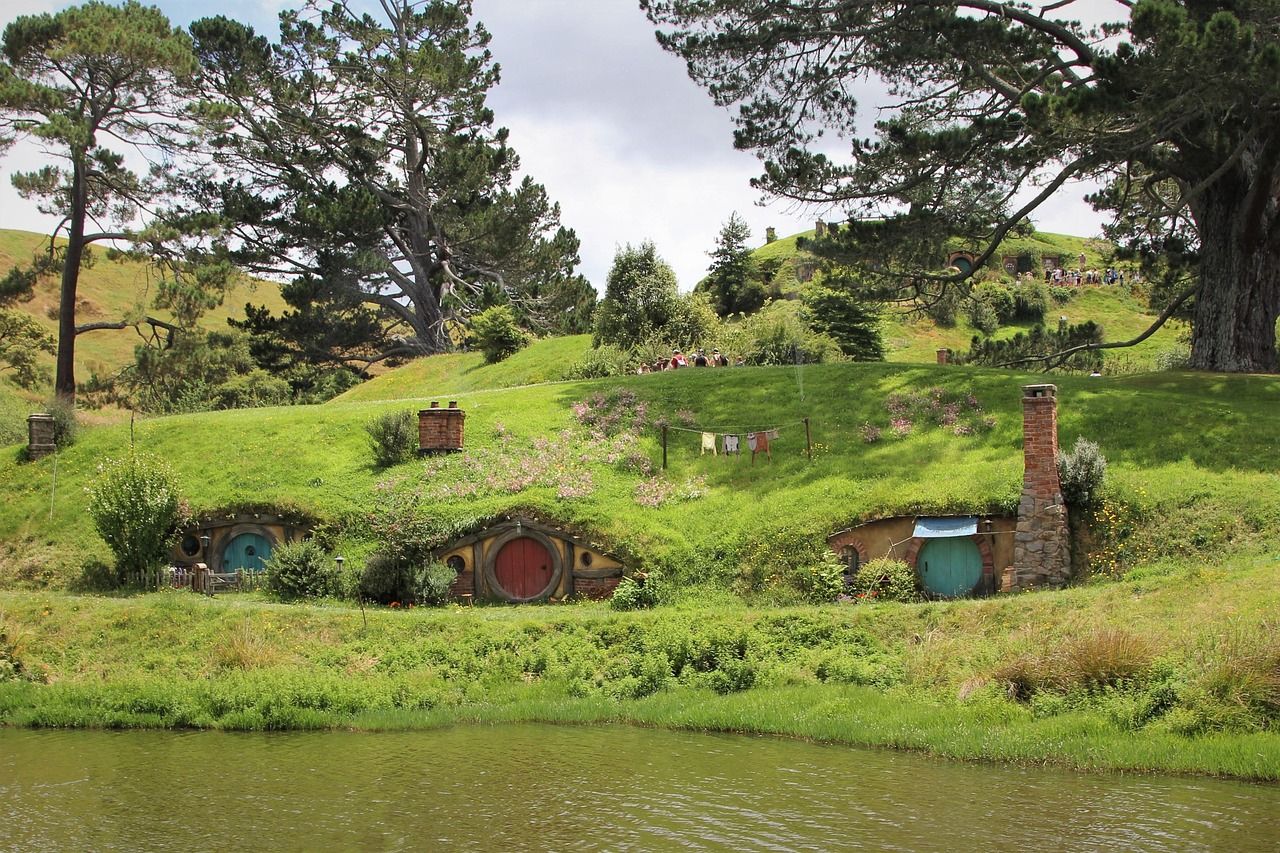
Most film sets are torn down the day shooting wraps. Hobbiton is the exception. Built on a working sheep farm near Matamata in the Waikato for Peter Jackson's The Lord of the Rings, the Shire was rebuilt in permanent materials for The Hobbit trilogy and has been open to visitors ever since: dozens of round-doored hobbit holes, the Party Tree, the mill and a working Green Dragon Inn.
On screen: The Lord of the Rings (2001-2003) and The Hobbit (2012-2014), with New Zealand standing in for the whole of Middle-earth. Mount Ngauruhoe in Tongariro National Park played Mount Doom.
Worth seeing: the Hobbiton Movie Set tour, finishing with a drink at the Green Dragon; the Tongariro Alpine Crossing, a full-day hike past Mount Ngauruhoe; Wellington, where Weta Workshop runs tours of the workshop that made the films' props and creatures.
Heads-up: Hobbiton can only be visited on a guided tour, and tours book out weeks ahead in the southern summer (December to February). Matamata is about two hours' drive from Auckland, and tours also leave from Rotorua.
Dubrovnik, Croatia - welcome to King's Landing
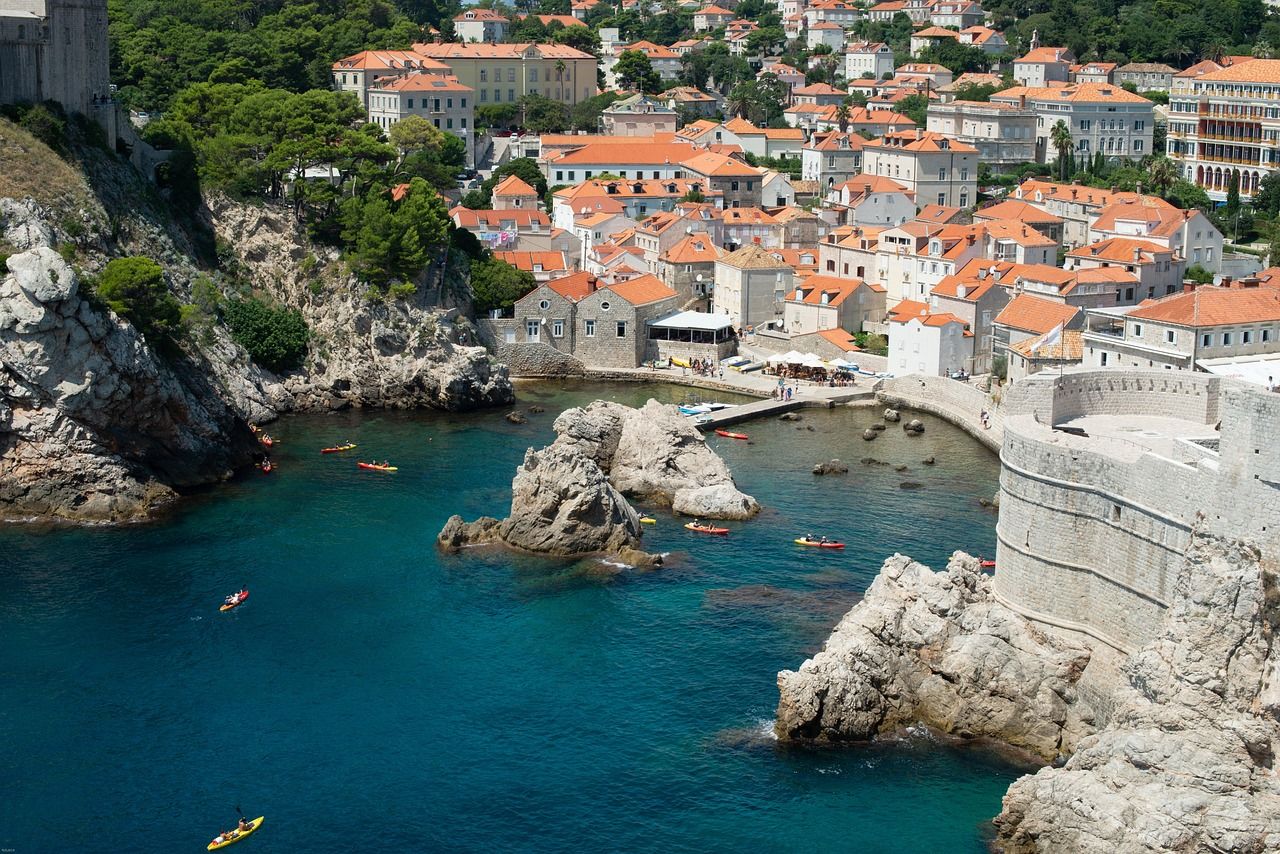
Dubrovnik's walled old town was beautiful long before HBO arrived, but Game of Thrones turned it into King's Landing and the city has never quite been the same. The limestone streets, the sea walls and the fortresses outside them appear across most of the series, and you can walk nearly all of it in a day.
On screen: Game of Thrones, from the second season. The Jesuit Staircase is where Cersei's walk of shame begins, and Fort Lovrijenac stood in for the Red Keep. Star Wars: The Last Jedi also used the old town for the casino city of Canto Bight.
Worth seeing: a full circuit of the city walls (about 2 km, best at opening time); Fort Lovrijenac on its rock outside the Pile Gate; a short boat trip to Lokrum island, where the Qarth scenes were filmed.
Heads-up: the old town fills with cruise-ship passengers by mid-morning, so walk the walls first thing or late in the afternoon. The walls carry a steep entry fee; the Dubrovnik Pass bundles them with several museums and local buses.
Petra, Jordan - the Last Crusade's final stop
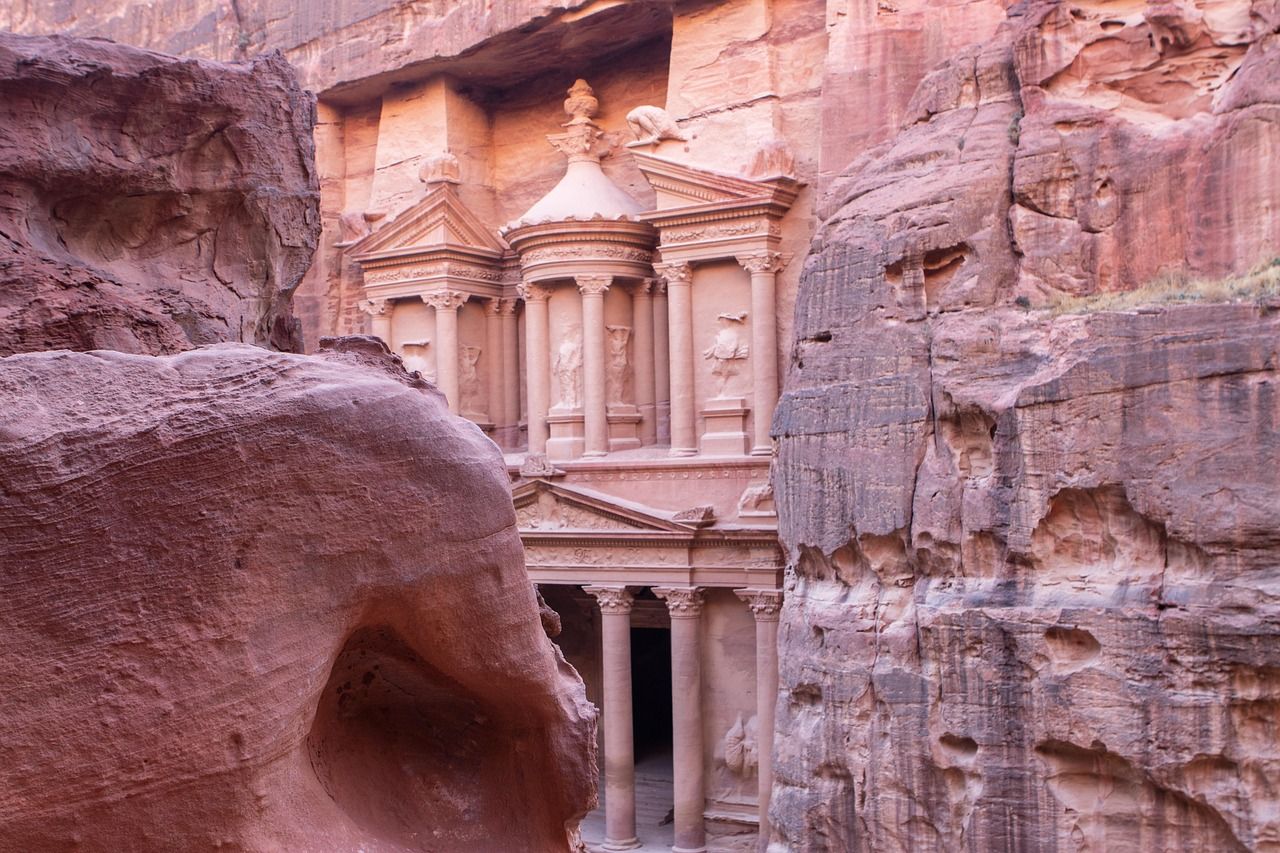
The final act of Indiana Jones and the Last Crusade (1989) ends at a rose-red facade carved into a cliff: the Treasury, or Al-Khazneh, at Petra. In the film it hides the Holy Grail. In reality it is the best-known monument of a Nabataean city carved from sandstone more than 2,000 years ago, and walking out of the narrow Siq gorge to see it for the first time is one of the great arrivals in travel.
On screen: Indiana Jones and the Last Crusade. Jordan's desert has played other worlds too: Wadi Rum, a couple of hours' drive south, was used for The Martian and Dune, and long before them for Lawrence of Arabia.
Worth seeing: the Siq and the Treasury early in the morning, before the tour groups; the climb of around 800 steps to the Monastery (Ad Deir), bigger than the Treasury and far quieter; a night in a desert camp in Wadi Rum.
Heads-up: buy the Jordan Pass before you travel. It covers the tourist visa fee (if you stay at least three nights) and entry to Petra, and pays for itself on a single visit. Petra by Night lights the Siq and the Treasury with candles on a few evenings a week.
Glenfinnan and the Scottish Highlands, UK - the Hogwarts Express
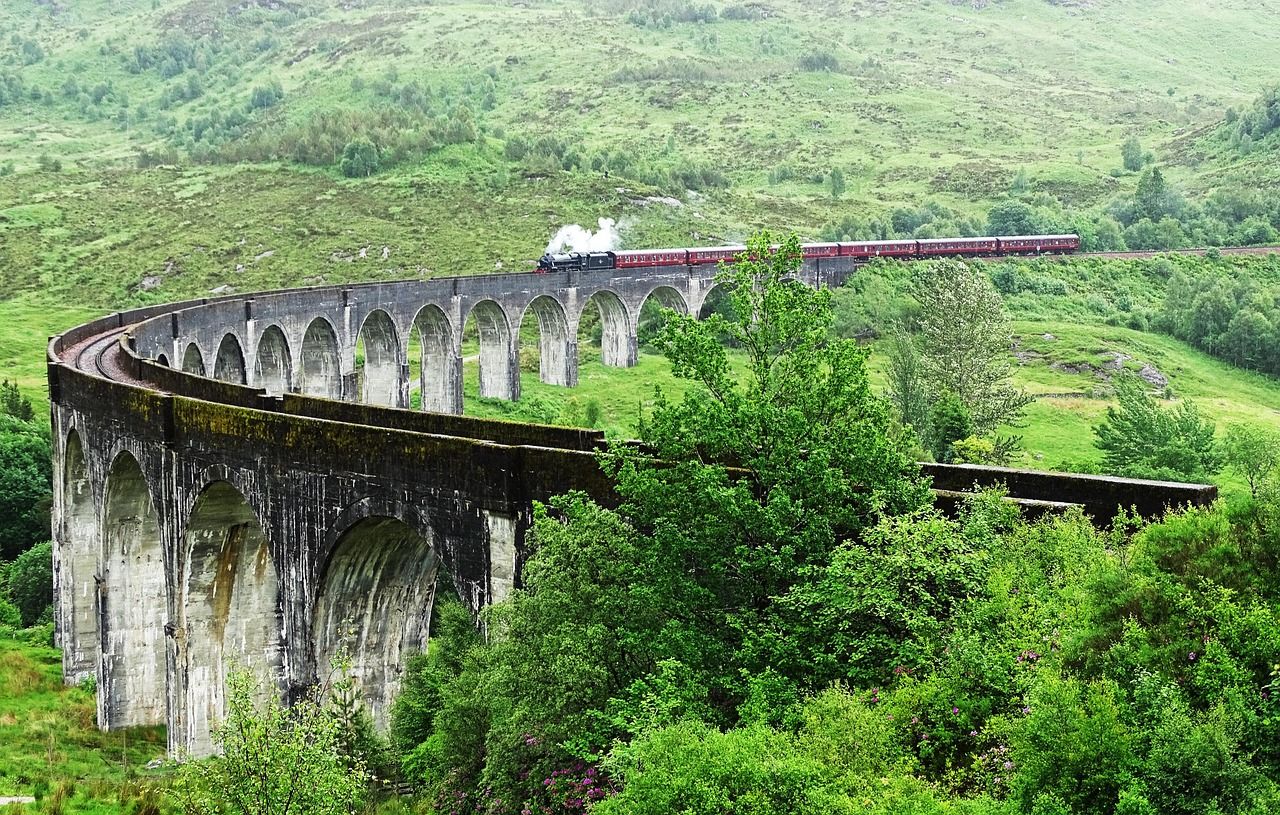
The curving 21-arch viaduct at Glenfinnan carried the Hogwarts Express in several Harry Potter films, and the real thing still runs. The Jacobite steam train crosses it on the line from Fort William to Mallaig, through some of the finest scenery in Britain, and watching it puff across the arches from the hillside above is a rite of passage for fans.
On screen: the Harry Potter films, with the Hogwarts Express on the viaduct. Nearby Glencoe appears in Harry Potter and the Prisoner of Azkaban and in Skyfall, and Eilean Donan Castle has featured in films from Highlander to The World Is Not Enough.
Worth seeing: the Glenfinnan Viaduct viewpoint, a short walk up from the visitor centre, timed for the steam train; a ride on The Jacobite itself; Glencoe and Eilean Donan Castle on the road towards Skye.
Heads-up: The Jacobite runs in the warmer months only and sells out early, so book well ahead. From June to September, pack midge repellent: the Highland midge is the one thing the films leave out.
Southern Tunisia - a long time ago, on Tatooine
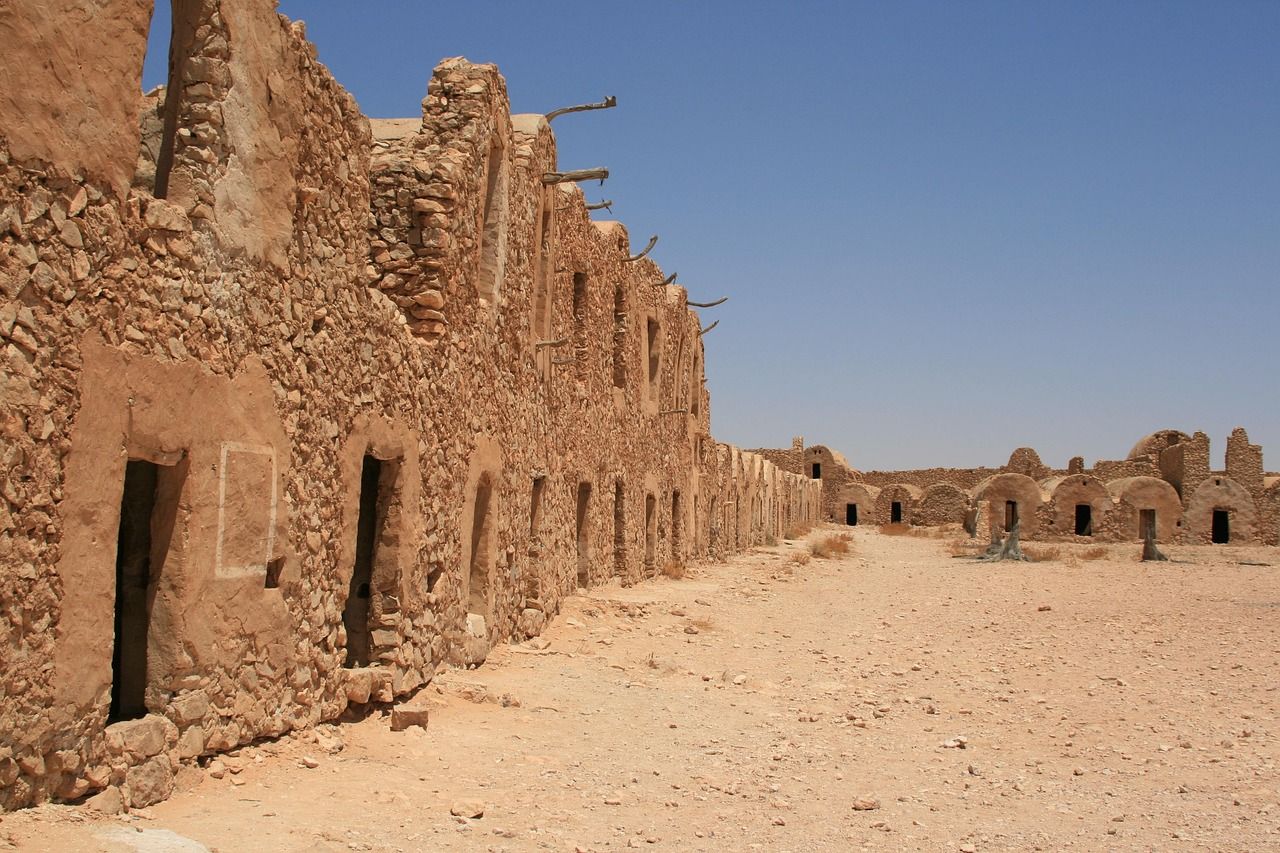
Luke Skywalker's home planet is real enough to visit. George Lucas filmed Tatooine across southern Tunisia for the original Star Wars in 1977 and came back for the prequels, and several sets still stand in the desert. He even borrowed the planet's name from the town of Tataouine.
On screen: Star Wars: A New Hope and The Phantom Menace. The Hotel Sidi Driss in Matmata, a traditional underground troglodyte home, was the Lars family homestead; Ksar Ouled Soltane near Tataouine played the slave quarters of Mos Espa; and the Mos Espa set itself still stands in the desert near Tozeur. The English Patient was also filmed around Tozeur.
Worth seeing: a night at the Hotel Sidi Driss, which still takes guests; the Mos Espa set and the nearby Ong Jemel rock formation; Chott el Djerid, the vast salt flat where Luke watches the twin suns set.
Heads-up: the locations are spread over several hundred kilometres of desert, so most visitors join a two- or three-day tour from Djerba or Tozeur. Summer heat is extreme; go between October and April. Check your government's travel advice before you go, particularly for areas near the borders.
Salzburg, Austria - the hills are alive
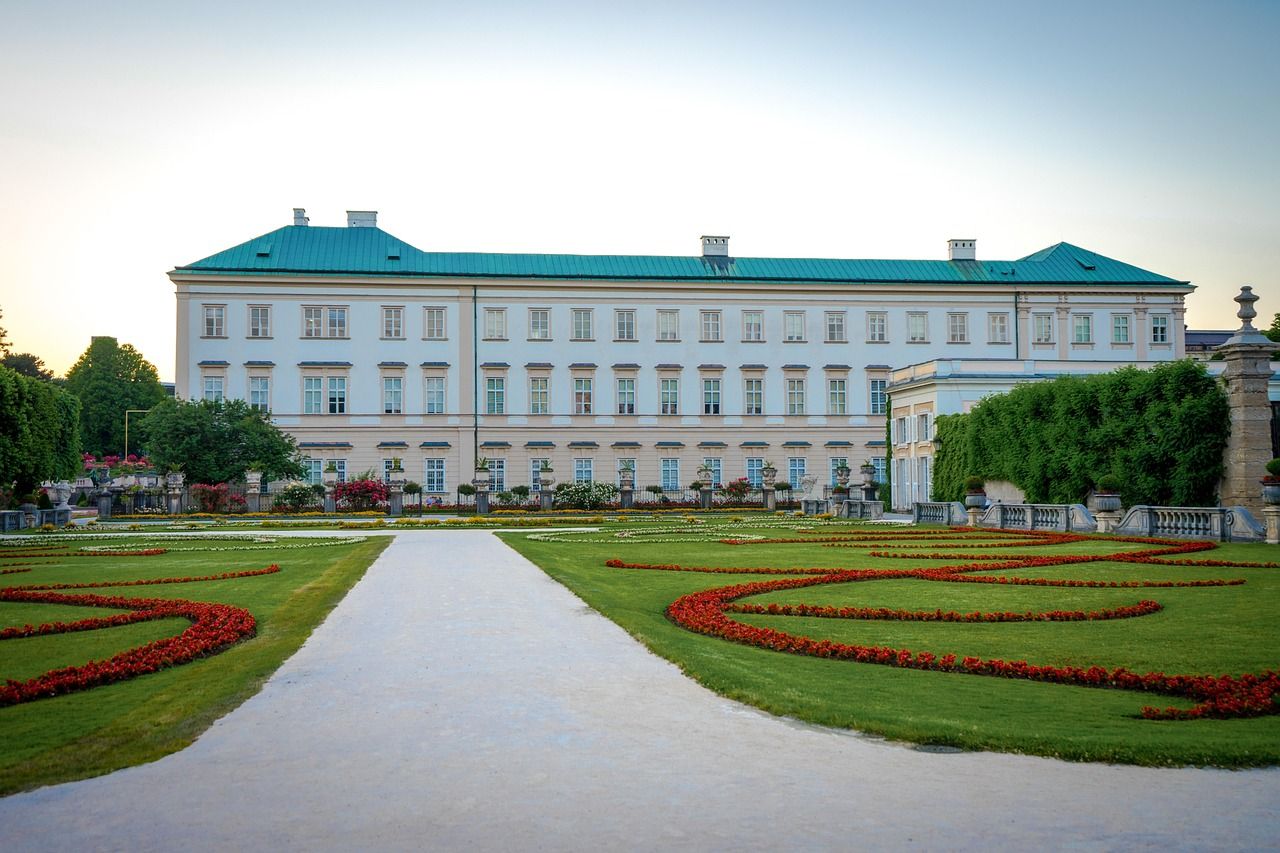
The Sound of Music (1965) is arguably better known abroad than in Austria itself, but Salzburg has embraced it. The city where the real von Trapp family lived is full of locations from the film, and the baroque old town and the lakes and mountains around it look just as they do on screen.
On screen: The Sound of Music. The Mirabell Gardens and their Pegasus fountain are where Maria and the children sing "Do-Re-Mi"; the glass gazebo from "Sixteen Going on Seventeen" now stands in the grounds of Hellbrunn Palace; Nonnberg Abbey is Maria's convent; and the wedding was filmed in the basilica at Mondsee.
Worth seeing: the Mirabell Gardens (free to wander); Hellbrunn Palace and its trick fountains; a day trip to the lakes of the Salzkammergut, taking in Mondsee and Hallstatt.
Heads-up: the Salzburg Festival takes over the city from late July to the end of August, with hotel prices to match, so book early or come in June or September. Several companies run Sound of Music tours that cover the main locations in half a day.
Iceland - other worlds, one island
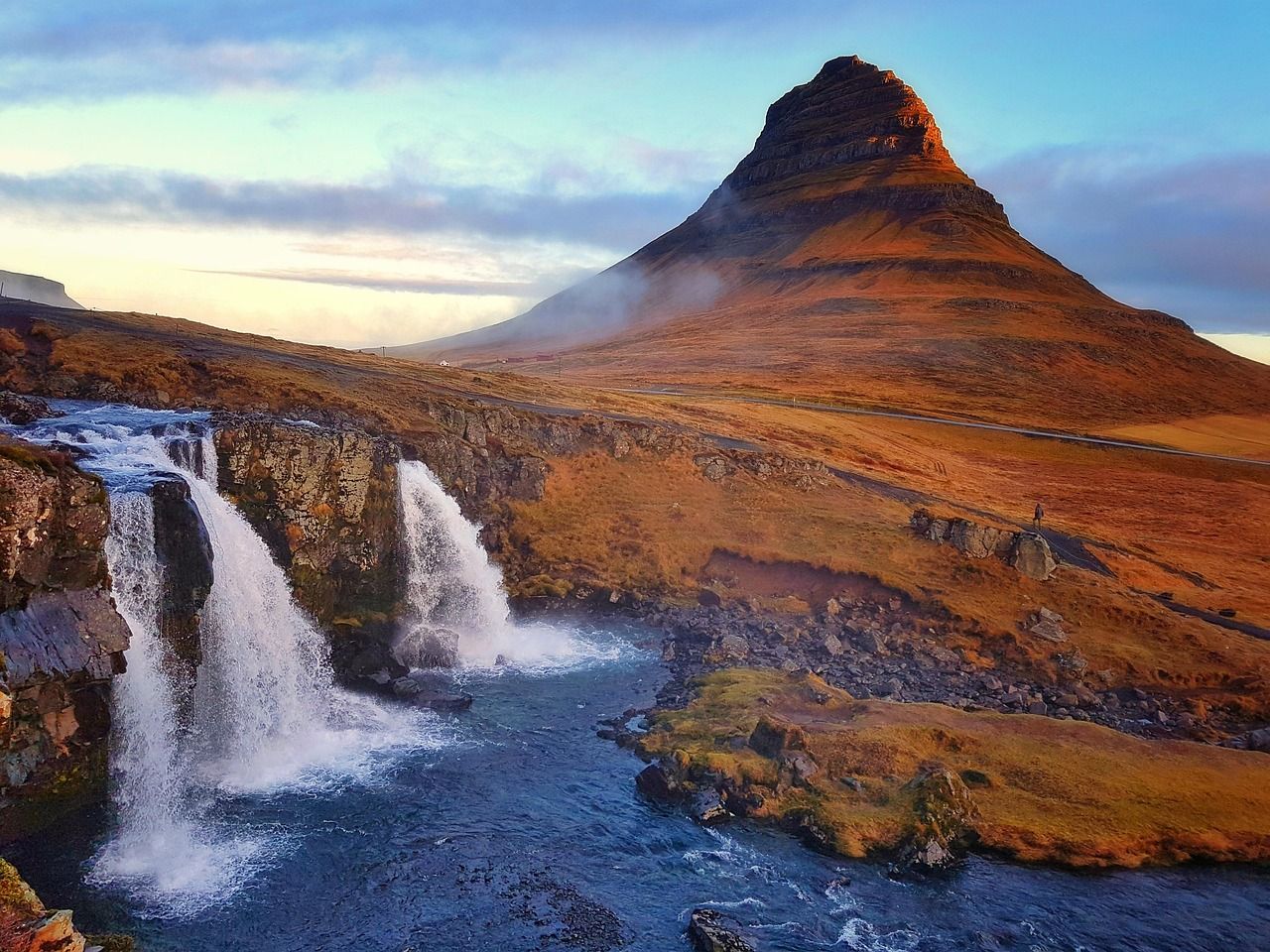
Iceland has quietly become one of the film industry's favourite places to shoot somewhere else entirely. Its glaciers, black-sand beaches and lava fields have stood in for alien planets and for the frozen lands of Westeros, and most of them are within a day's drive of Reykjavik.
On screen: Game of Thrones filmed the road to the Eyrie at Thingvellir National Park, and used Lake Myvatn and its lava caves for scenes north of the Wall; Kirkjufell, the arrowhead-shaped mountain on the Snaefellsnes peninsula, appears in a later season. In Interstellar, the icy planet was filmed on the Svinafellsjokull glacier.
Worth seeing: Thingvellir, where you can stand in the rift between two tectonic plates; Kirkjufell and its waterfall; a guided glacier walk from Skaftafell, close to the Interstellar location.
Heads-up: never walk on a glacier without a guide. At Reynisfjara black-sand beach the "sneaker waves" are genuinely dangerous, so stay well back from the water. Weather changes fast and distances are bigger than they look; check road conditions before every drive.
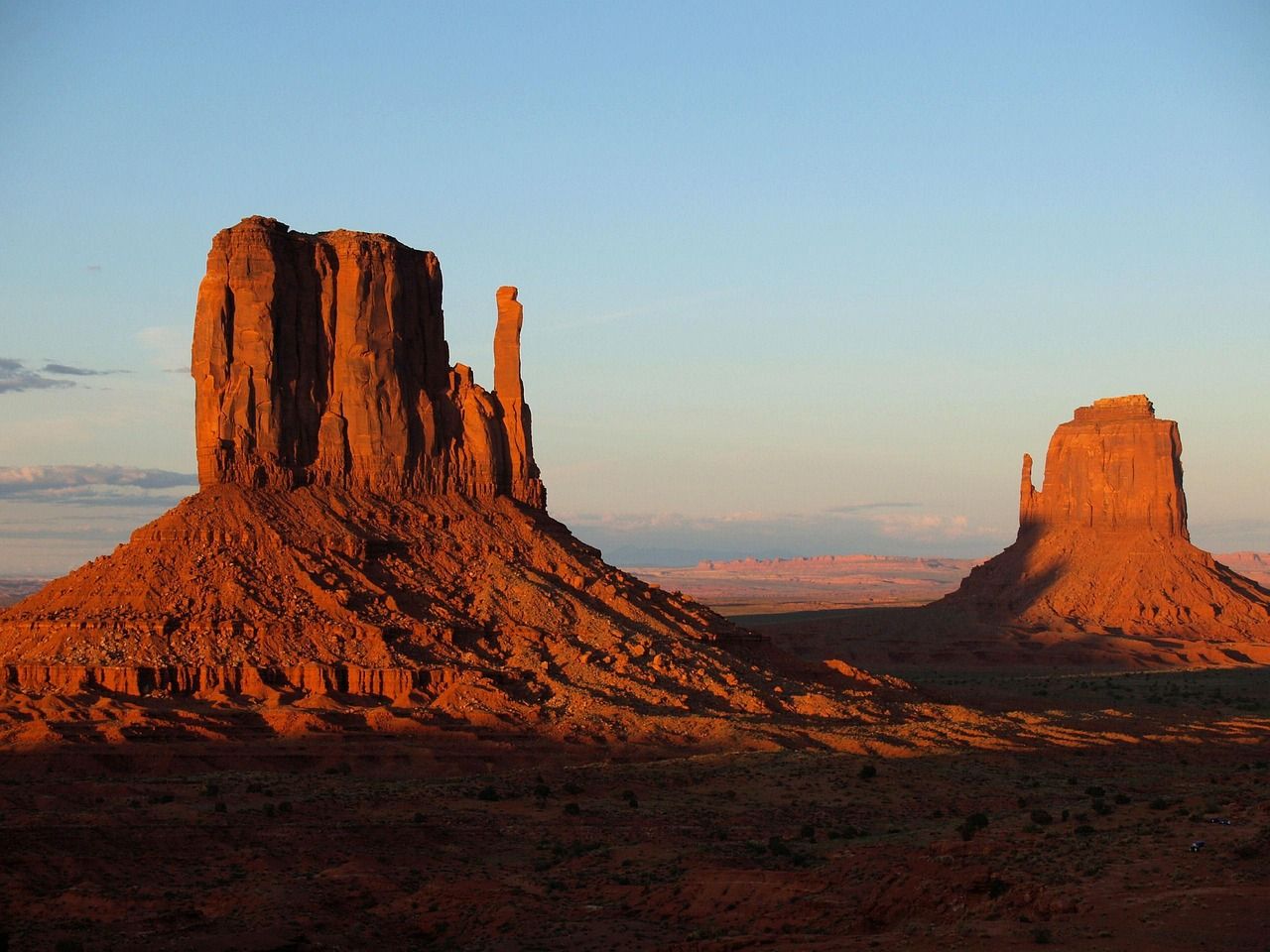
Monument Valley, USA - the American West on film
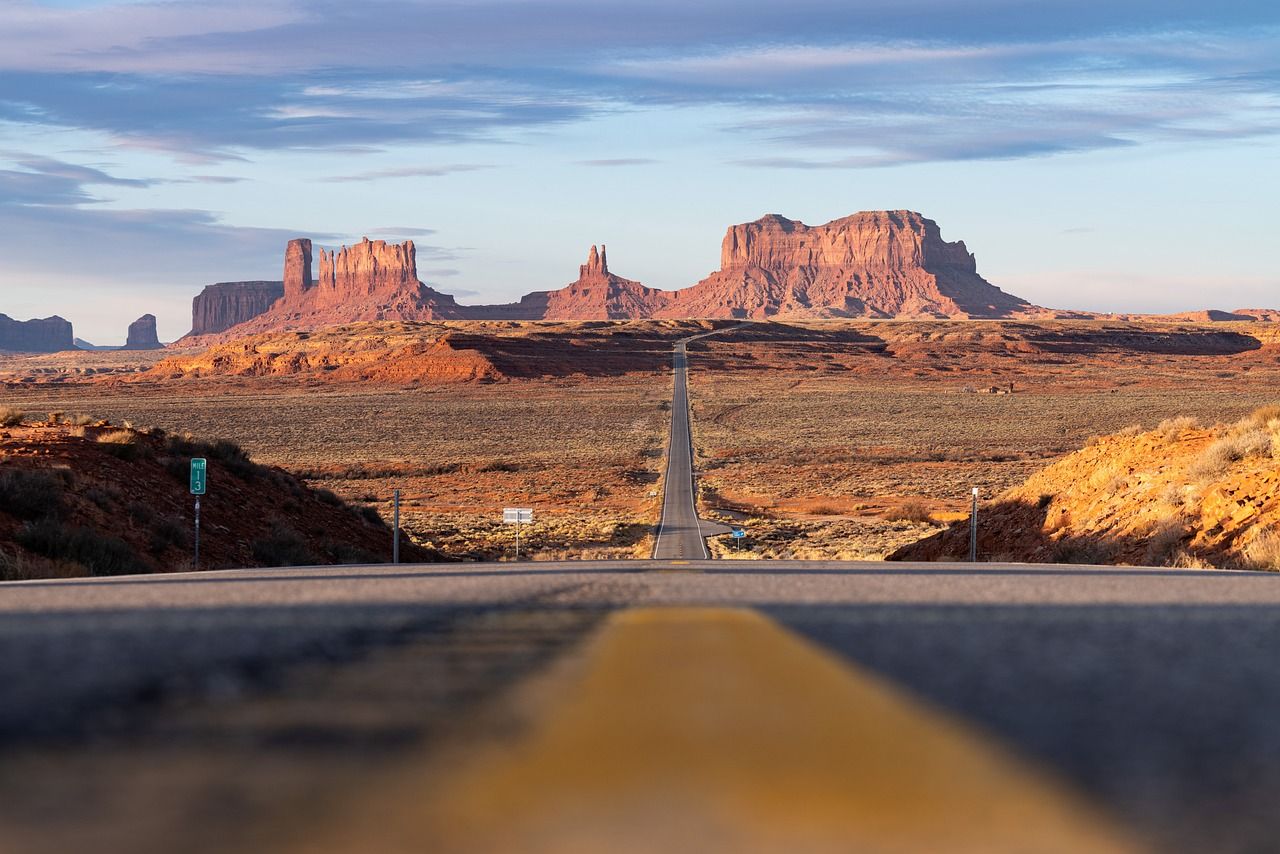
If you can picture a Western, you can probably picture Monument Valley. John Ford shot Stagecoach here in 1939 and came back again and again, and the red sandstone buttes on the Utah-Arizona border have defined the American West on screen ever since.
On screen: Stagecoach, The Searchers and many more John Ford Westerns; Forrest Gump, whose cross-country run ends on US Highway 163 at a spot now known as Forrest Gump Point; and later films including Thelma & Louise and Back to the Future Part III.
Worth seeing: the 17-mile Valley Drive past the Mittens and John Ford's Point; a Navajo-guided tour into areas closed to private vehicles; the view from Forrest Gump Point, a short drive north of the valley.
Heads-up: Monument Valley is a Navajo Tribal Park, not a national park, so the America the Beautiful pass does not cover entry. The Navajo Nation observes daylight saving time while the rest of Arizona does not, so in summer a tour time can be an hour off what your phone expects. Mobile signal is patchy: download your maps before you go.
Maya Bay, Thailand - The Beach, recovered
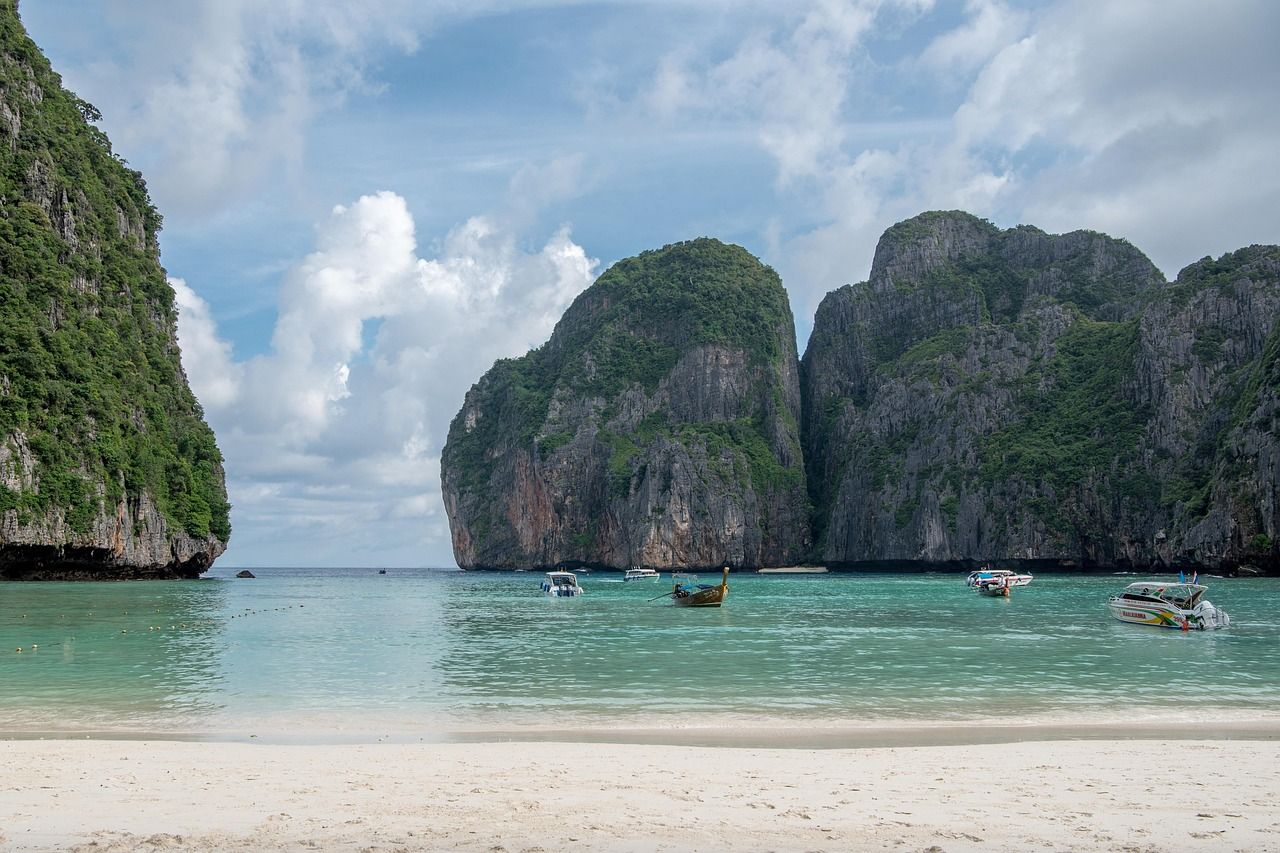
Few films have changed a place as much as The Beach (2000). Leonardo DiCaprio's backpacker paradise was Maya Bay on Koh Phi Phi Leh, and the film brought so many boats and swimmers that the coral almost disappeared. Thailand closed the bay in 2018 to let it recover; it has since reopened under strict rules, and it is still one of the most beautiful bays in Asia.
On screen: The Beach. Further north in Phang Nga Bay, the limestone pillar of Khao Tapu became "James Bond Island" after The Man with the Golden Gun (1974).
Worth seeing: Maya Bay itself, from the boardwalk and the sand; a longtail or speedboat trip around Phi Phi Leh's lagoons; Phang Nga Bay by sea kayak, paddling through the limestone caves.
Heads-up: swimming in Maya Bay is no longer allowed, boats drop visitors at a jetty on the far side of the island, and visitor numbers and time on the beach are limited. The bay also closes for a period each year, usually around August and September, to give the reef a rest, so check before you book.
Montmartre, Paris, France - Amélie's neighbourhood
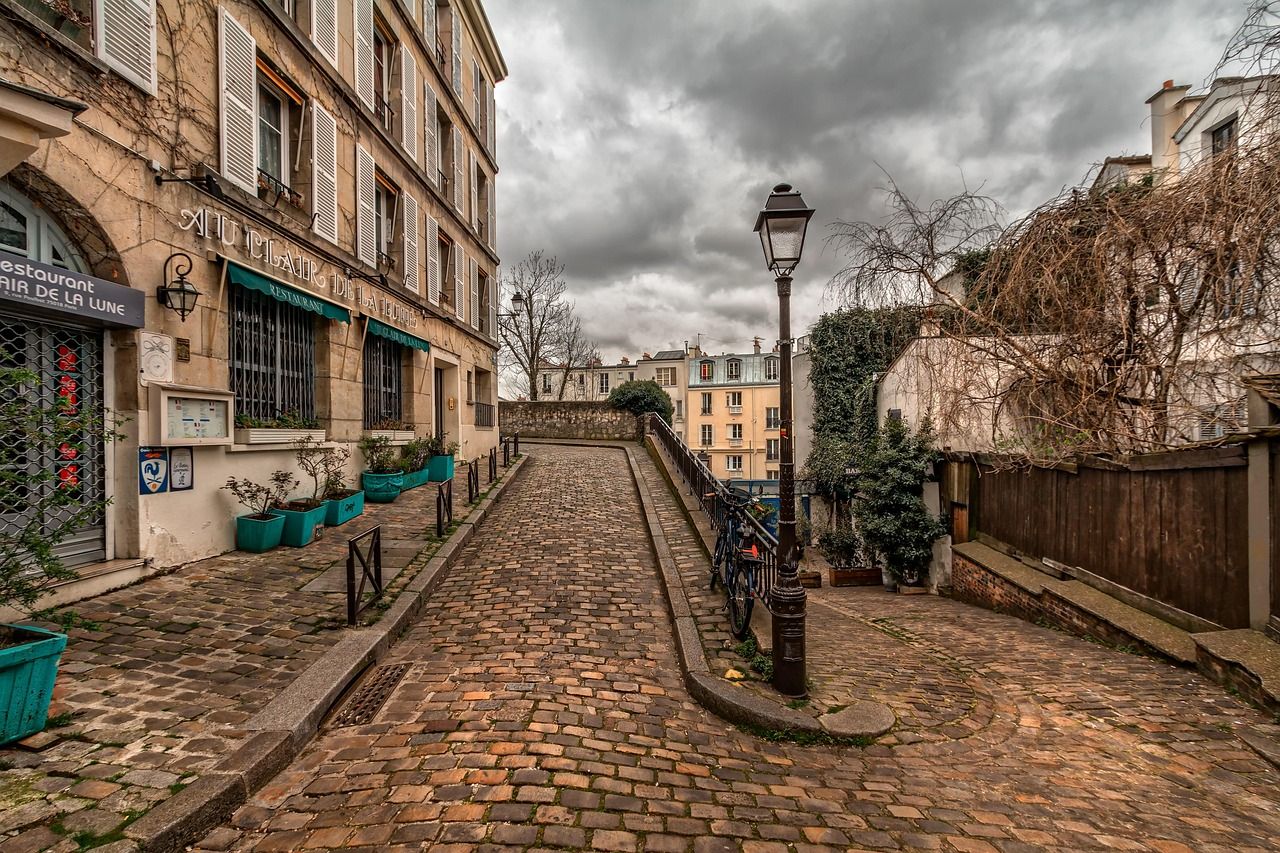
Paris has been filmed more than almost any city on Earth, but no film fixed a neighbourhood in people's minds quite like Amélie (2001). Its Montmartre - steep cobbled streets, a carousel below the Sacré-Coeur, a café on the corner - is all still there, and you can see most of it in a morning.
On screen: Amélie, whose café, the Café des Deux Moulins on rue Lepic, is still open; Midnight in Paris (2011), whose hero waits on the steps beside the church of Saint-Etienne-du-Mont for a vintage car to take him back to the 1920s; and, more recently, Emily in Paris, whose square, Place de l'Estrapade, is just around the corner.
Worth seeing: breakfast at the Café des Deux Moulins and a slow walk up rue Lepic to the Sacré-Coeur; the Canal Saint-Martin, where Amélie skips stones; the Latin Quarter for the Midnight in Paris and Emily in Paris locations.
Heads-up: the top of Montmartre is crowded by late morning, so arrive early or come at dusk for the view. Watch out for pickpockets and petition scams on the steps below the Sacré-Coeur.
If you can only pick one
Go to Petra. Plenty of film locations are smaller in real life than they look on screen; Petra is the opposite. The walk through the Siq, the first glimpse of the Treasury and the scale of everything beyond it make even Indiana Jones's arrival look understated, and Wadi Rum's desert, which has played Mars more than once, is just down the road.
Before you go
A few practical bits worth doing before you fly, whichever film you are following:
- Sort out data before you land. Several places on this list are remote - Monument Valley, southern Tunisia, the Highlands, Iceland's back roads - so set up an eSIM at home on Wi-Fi, and download offline maps while you still have a connection. A single-country plan suits most of these trips.
- Check your phone is eSIM-compatible. Most phones from the last few years are, but our device compatibility checker confirms it in a few seconds.
- Combining locations? Dubrovnik and Salzburg, or Paris and the Highlands, pair well in one trip. A regional plan covers several countries on the same eSIM, so there is nothing to swap at the border.
Browse our destinations or use Find My Plan to get a recommendation for your itinerary. Wherever you are headed, enjoy the scenery - this time in real life.
Photos from Pixabay: Nel_Botha, DrNickStafford, Squirrel_photos, AnNacht_84, Matthias_Lemm, Leonhard_Niederwimmer, JimboChan, manniguttenberger, pen_ash, edmondlafoto, ArtTower.